The Ultimate Guide to Dominating Local SEO with High-Impact Website Content
Discover how high-impact website content can transform your local SEO strategy. Learn proven techniques to improve local search rankings, attract qualified customers, increase website traffic, and build trust with content that helps your business stand out on Google and beyond.
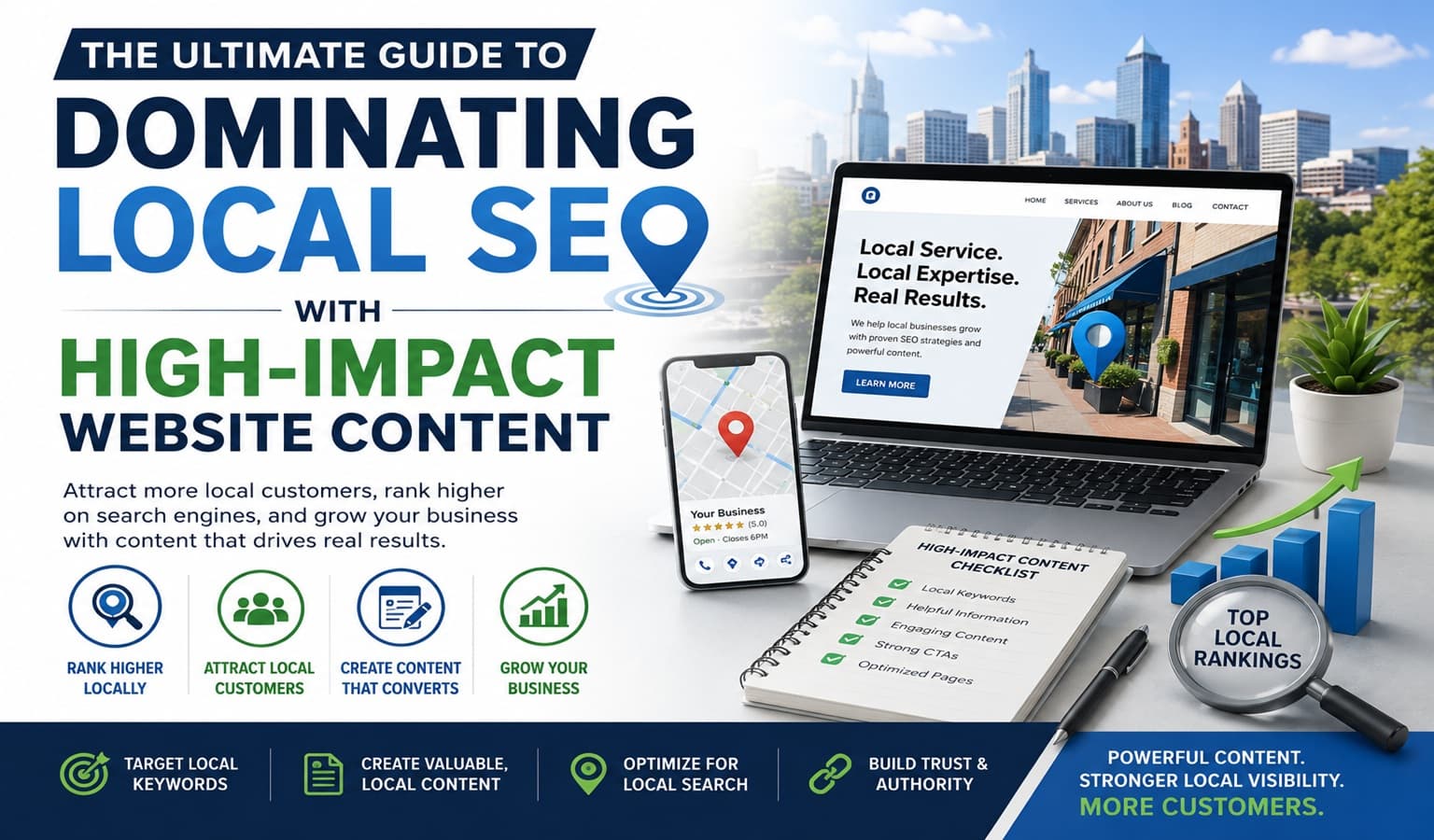
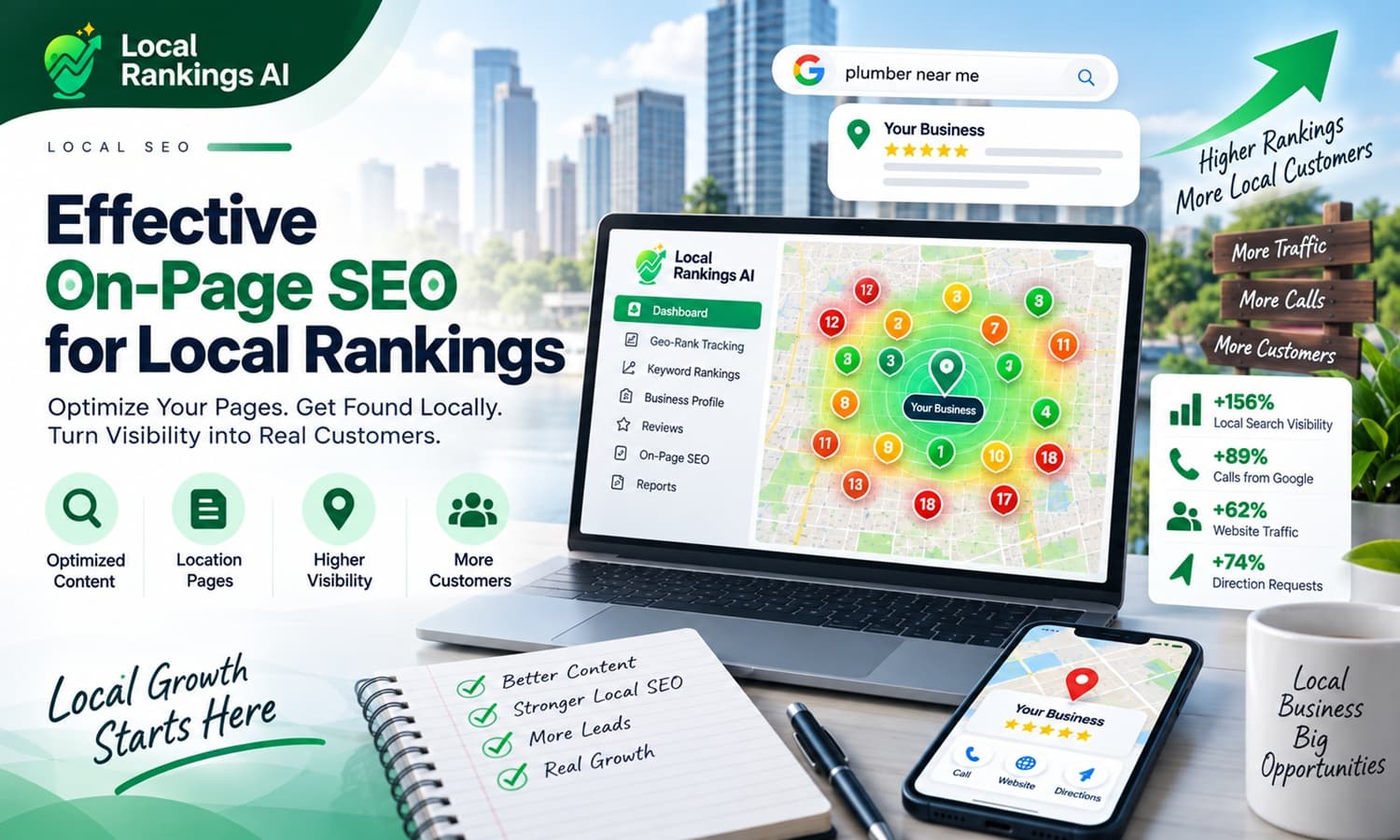
Local SEO improves when businesses embed city and neighborhood names naturally within headings, service pages, and meta descriptions. Google Business Profile integration, localized schema markup, and 500+ words of location-specific content boost rankings. Customer testimonials mentioning specific areas, local phone numbers, and embedded Google Maps strengthen relevance signals significantly.
Optimization of local content matters significantly, since 46% of all internet searches carry local intent. Target location-specific keywords, embed city or neighborhood names naturally within page copy, and create dedicated pages addressing local customer needs to strengthen geographic relevance and improve search visibility.
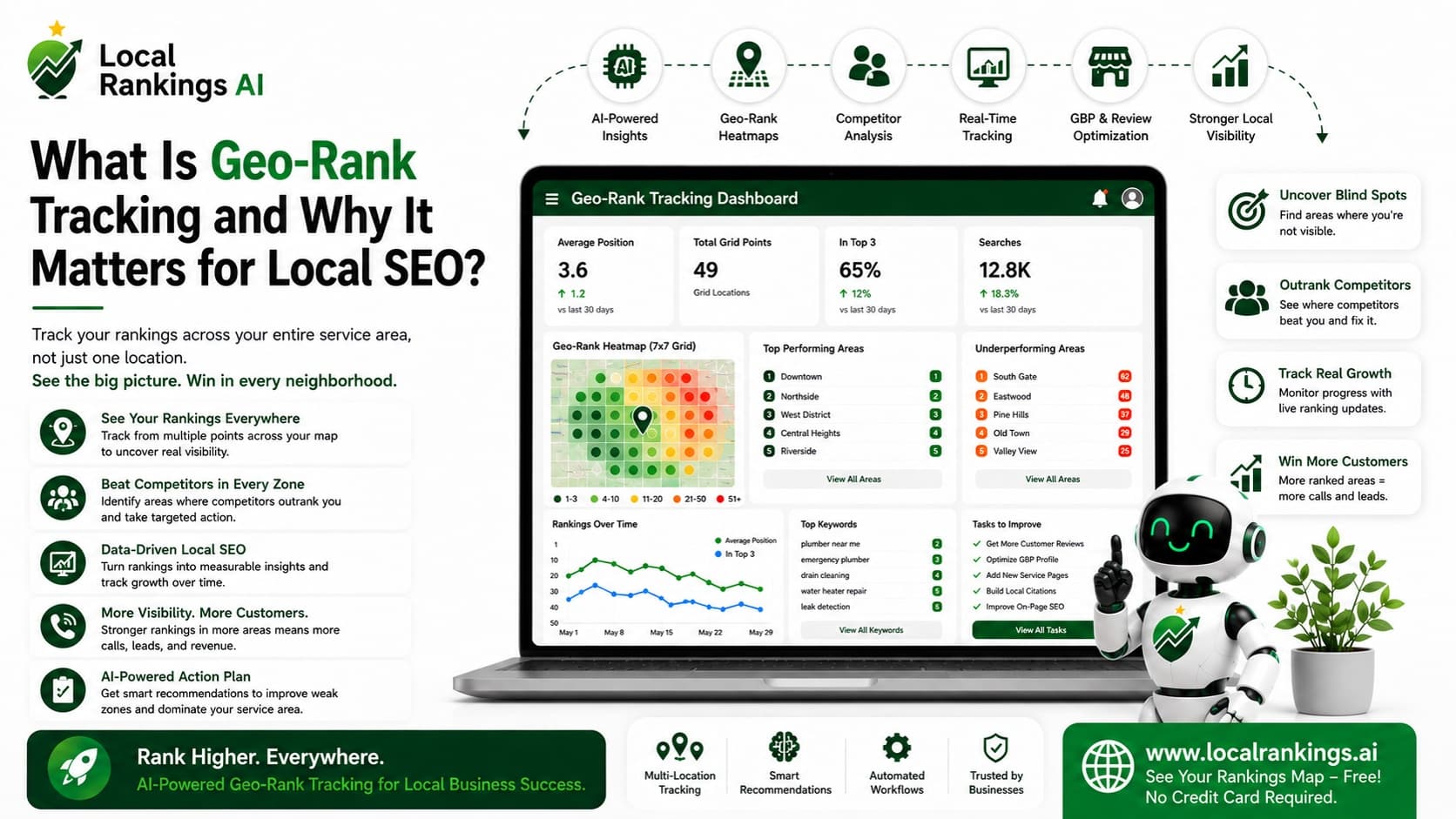
Local SEO content improves when pages target neighborhood-specific keywords, service-area terms, and location pages instead of generic copy. Local Rankings AI's geo-rank grid identifies which streets and neighborhoods underperform, so content writers can prioritize updates by area. Adding location details, local landmarks, and city-specific service descriptions strengthens relevance signals Google uses to match search intent.
Key Takeaways
- Local search accounts for 46% of all internet searches, making geographic optimization essential for business visibility.
- Research customer search phrases directly through Google and Bing search suggestions before finalizing content keywords.
- Local SEO strategies drive traffic and revenue growth for businesses of all sizes, not just small enterprises.
- Implement a structured content planning strategy specifically designed for local business audiences to increase conversion rates.

What Do You Need Before You Start?
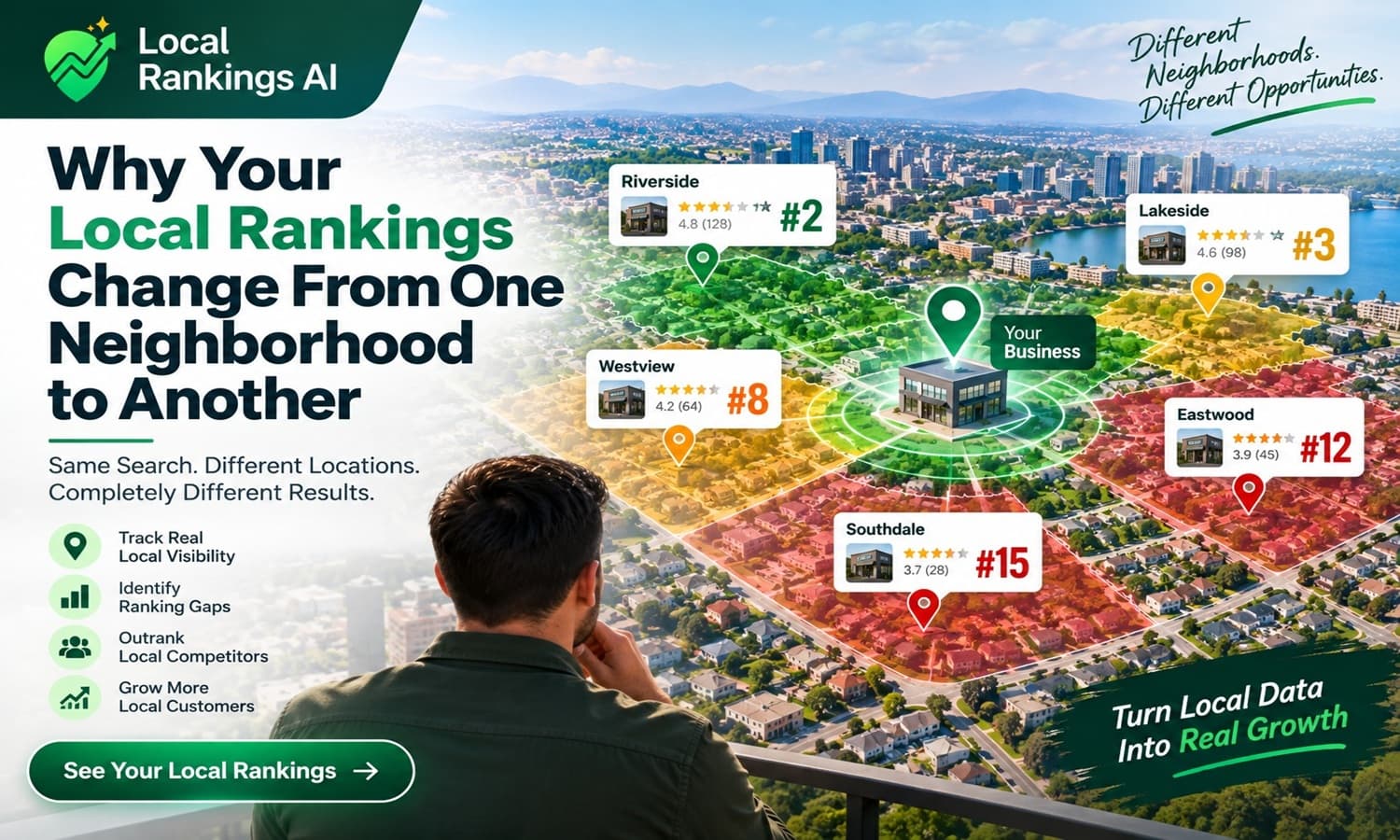
Street-level ranking data comes first. Business owners preparing to revise their site content need to know exactly where their pages already rank, block by block. Search visibility rarely looks the same across an entire service area. A single search from a store or office chair tells an incomplete story.
Why doesn't my own search result match what customers see?
Business owners often check their own rankings by typing their company name into Google, then assume that result reflects reality. It doesn't. What an owner sees when searching their own business often differs sharply from what a customer three miles away sees. Location, search history, and device all shift the results.