What Specific Tools Do You Offer for Local SEO Performance Tracking? | Local Rankings AI
What Specific Tools Do You Offer for Local SEO Performance Tracking?
Track local SEO beyond a single ranking point. Discover street-level visibility gaps, monitor Google, Apple, Bing and AI search presence, manage reviews and listings, optimize your website, and turn local SEO data into actionable insights and measurable growth.
Local Rankings AI combines street-level local rank tracking with multi-platform visibility, review automation, directories, website optimization, content, advertising, and reporting in one local growth platform.
Street-level rankings: See where your business ranks across your service area instead of relying on one location.
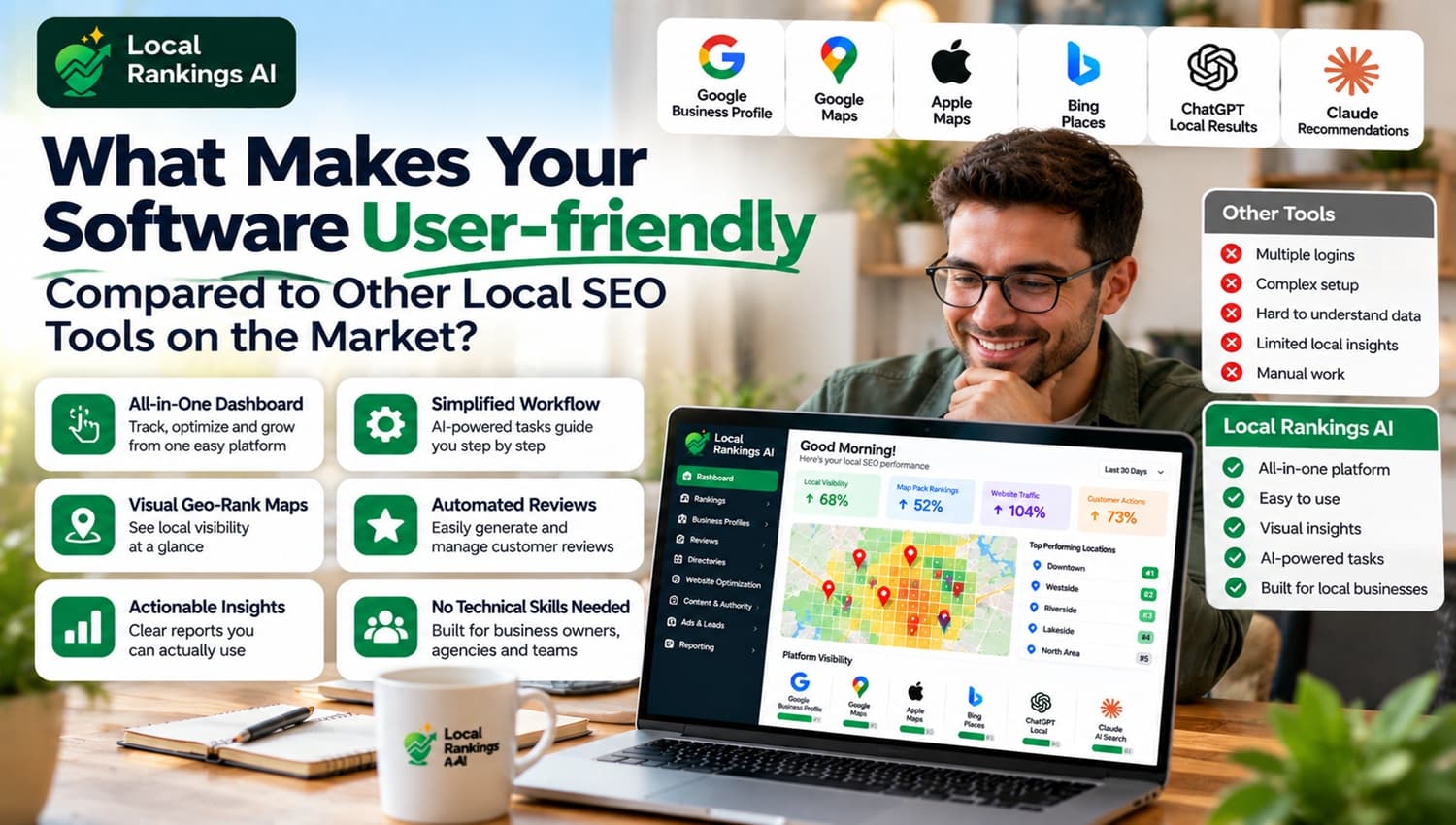
Platforms to Grow: Connect your business presence across Google Business Profile, Apple Maps, Bing Places, ChatGPT Local Pack Results, Claude Recommendations, and emerging AI search endpoints.
Actionable AI tasks: Turn visibility gaps into practical next steps rather than stopping at ranking data.
Reviews and directories: Automate review requests and keep important business information accurate and consistent.
Website, content and lead generation: Address website opportunities, build local authority, and combine organic visibility with paid demand generation.
Reporting: Bring rankings, progress, and performance into a clearer view for businesses and agencies.
A Local SEO toolkit should answer two questions: Where are we visible, and what should we do next?
How Does Geo-Rank Tracking Reveal Hidden Blind Spots?
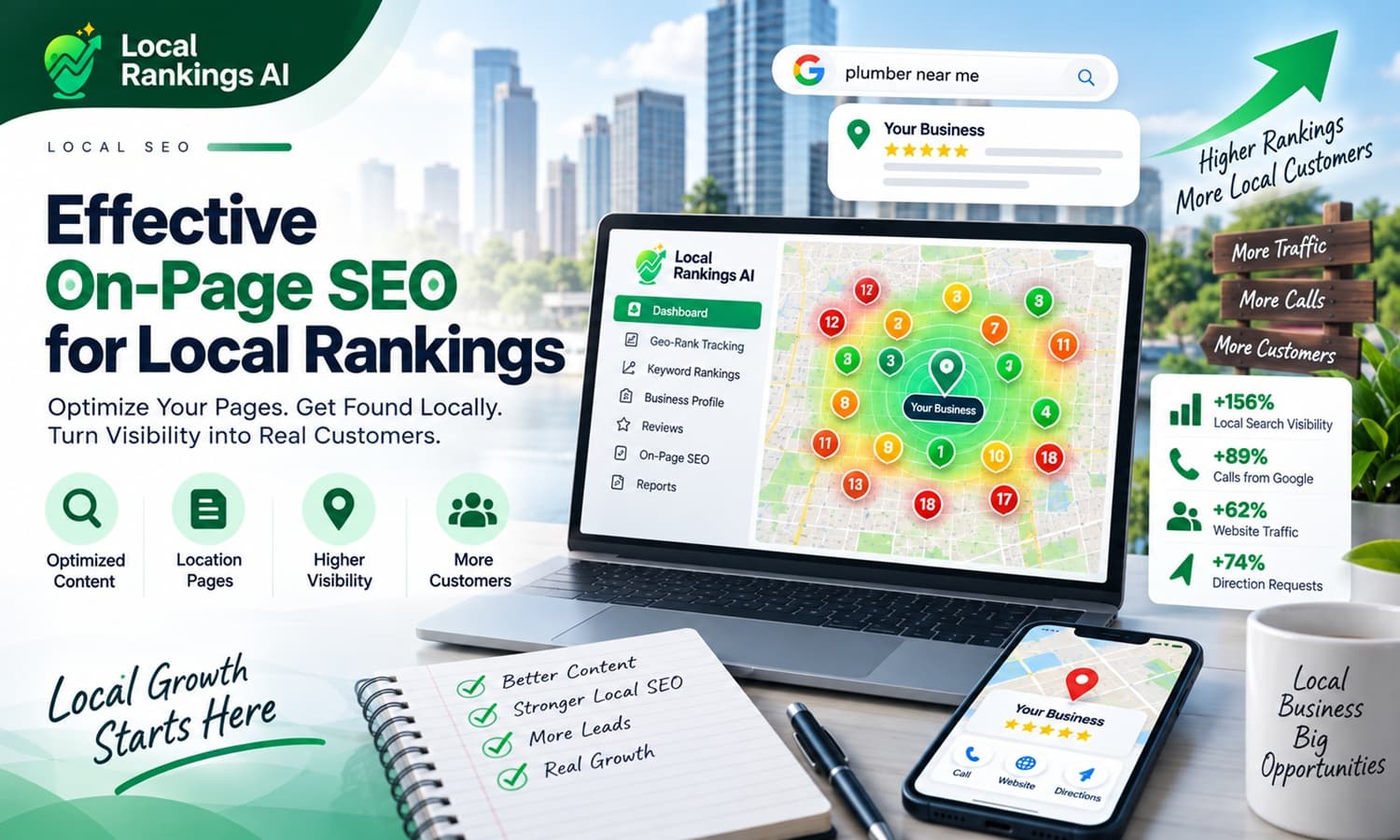
A precision geo-rank grid maps local visibility across an entire service area. Instead of treating one storefront address as the whole market, it shows how rankings shift from street to street and area to area.
Why single-location checks can miss local gaps
A business can rank strongly near its address while performing differently in surrounding neighborhoods.
Street-level mapping reveals areas where competitors appear more prominently.
Tracking movement over time helps identify whether optimization work is improving visibility.
What happens after a blind spot is identified?
Local Rankings AI layers actionable AI tasks onto visibility data, helping turn a ranking problem into a prioritized improvement workflow.
Identify underperforming areas.
Track ranking movement over time.
Use AI-generated tasks to focus optimization effort.
Create client-ready proof of progress.
Which Platforms Can Local Rankings AI Help You Show Up On?
The Platforms to Grow capability is designed around the way customers now discover local businesses across search engines, maps, and conversational AI.
Core platforms
Google Business Profile: Maintain your business presence where customers use Google Search and Maps.
Apple Maps: Extend local business visibility into Apple's mapping ecosystem.
Bing Places: Maintain business information for Bing's local search experience.
ChatGPT Local Pack Results: Connect business information with ChatGPT's local search experience.
Claude Recommendations: Support business visibility in Claude recommendation experiences.
Emerging AI search endpoints: The platform states that it is designed to connect with additional AI-driven discovery endpoints as the ecosystem develops.
One profile, broader distribution
According to the Platforms to Grow page, businesses enter their information once and Local Rankings AI formats and syncs the information across supported platforms. Updates such as hours, phone number, and website can then be synchronized rather than maintained manually in every destination.
What Does Platforms to Grow Actually Automate?
The platform describes six core operating benefits:
Instant multi-platform visibility: Expand the business presence beyond a single search platform.
AI-optimized connections: Format and submit business information for supported systems.
Voice-search readiness: Support discovery through voice assistants and conversational search.
One-click setup: Enter business details once rather than repeatedly recreating the same information.
Seamless updates: Changes to hours, phone, or website can be synchronized across supported destinations.
Reduced maintenance: Centralize ongoing platform updates instead of manually managing each location.
From one profile to multiple discovery surfaces
The documented workflow is simple: enter business details, publish and sync them to supported platforms, then maintain the information through centralized updates.
Which Tools Handle Reviews, Directories, and Website Optimization?
Platforms are only one part of local visibility. The broader Local Rankings AI system combines platform presence with reputation, directory, and website improvements.
Review Automation
Automatically request reviews after customer interactions such as purchases and appointments.
Use AI-assisted review replies.
Build a repeatable review workflow instead of relying on manual follow-up.
Directories
Keep important business information accurate and consistent.
Support listing synchronization across relevant directory sources.
Reduce discrepancies in core business details.
Website Optimizations
Identify technical and SEO opportunities.
Address performance and site-health issues.
Improve local visibility, search performance, and conversion potential.
How Do Content, Authority, Ads, and Website Design Fit In?
The current Local Rankings AI platform positions local growth as a connected system rather than a rank-tracking-only product.
Content & Authority Engine
Create valuable local content.
Develop authority-building assets.
Strengthen relevance, trust, and visibility.
Digital Ads & Lead Generation
Combine organic local growth with managed digital advertising.
Reach higher-intent local demand while organic visibility develops.
Connect visibility work with lead-generation objectives.
Website Design
Build a modern, mobile-first website around local SEO.
Align services, locations, trust signals, and conversion paths.
Address situations where the existing website is limiting growth.
How Do You Prove Local SEO ROI to Clients and Teams?
Ranking data becomes more useful when it can be connected to visibility trends, profile health, platform presence, optimization progress, and business outcomes.
What reporting should bring together
Local ranking movement and street-level visibility.
Progress across supported search and discovery platforms.
Review and reputation activity.
Directory and business information consistency.
Website optimization progress.
Content, authority, advertising, and lead-generation activity where applicable.
Client-ready documentation
The original guide emphasized turning raw ranking data into clean, client-ready proof. The updated platform positioning expands that idea: reporting should help explain what changed, where visibility improved, and what actions should happen next.
Frequently Asked Questions
Conclusion
Effective local SEO performance tracking is no longer limited to checking one Google ranking. Local Rankings AI combines street-level visibility with multi-platform presence, reviews, directories, website optimization, content, advertising, and reporting. The result is a broader workflow for seeing where customers can find a business, identifying gaps, and deciding what to improve next.