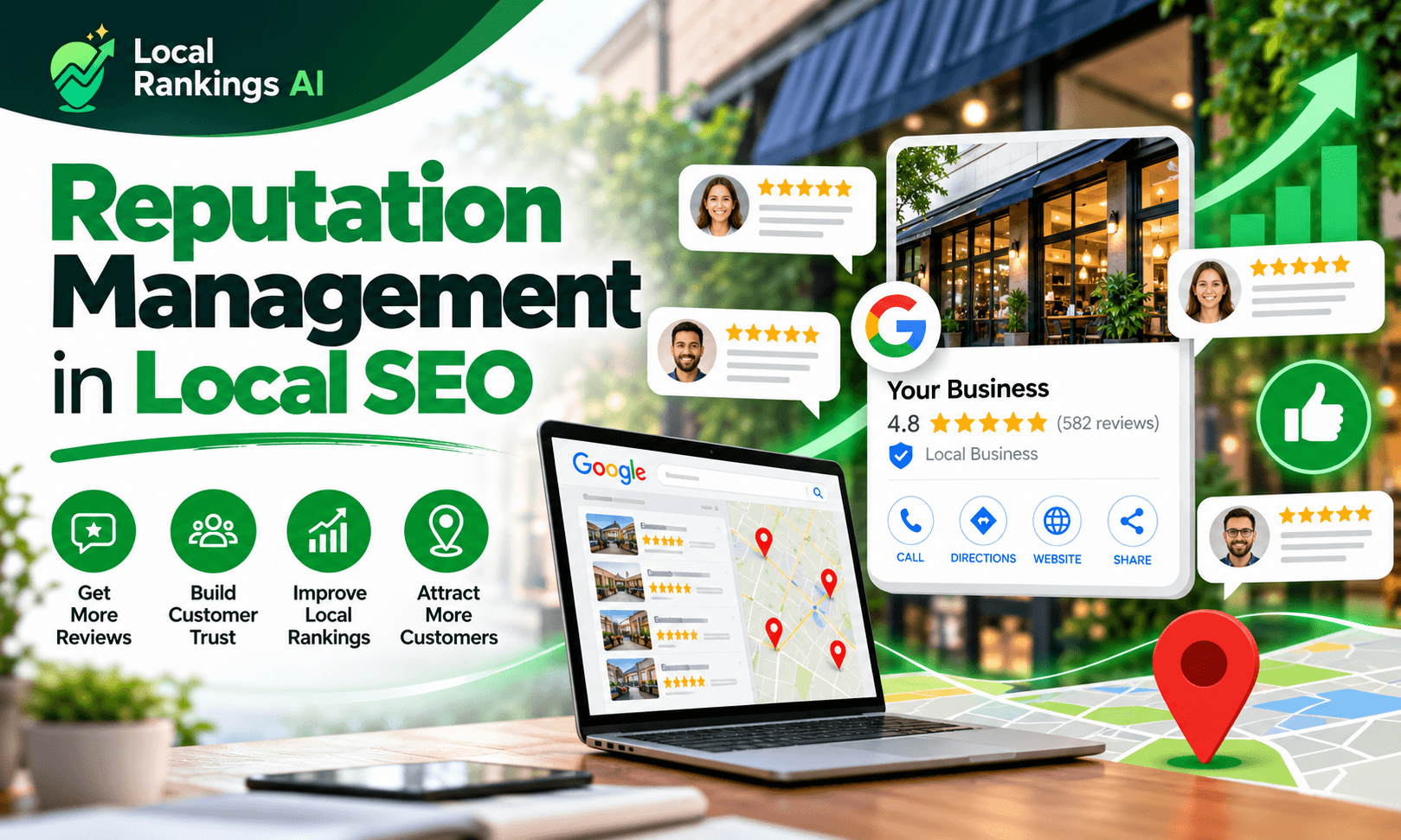
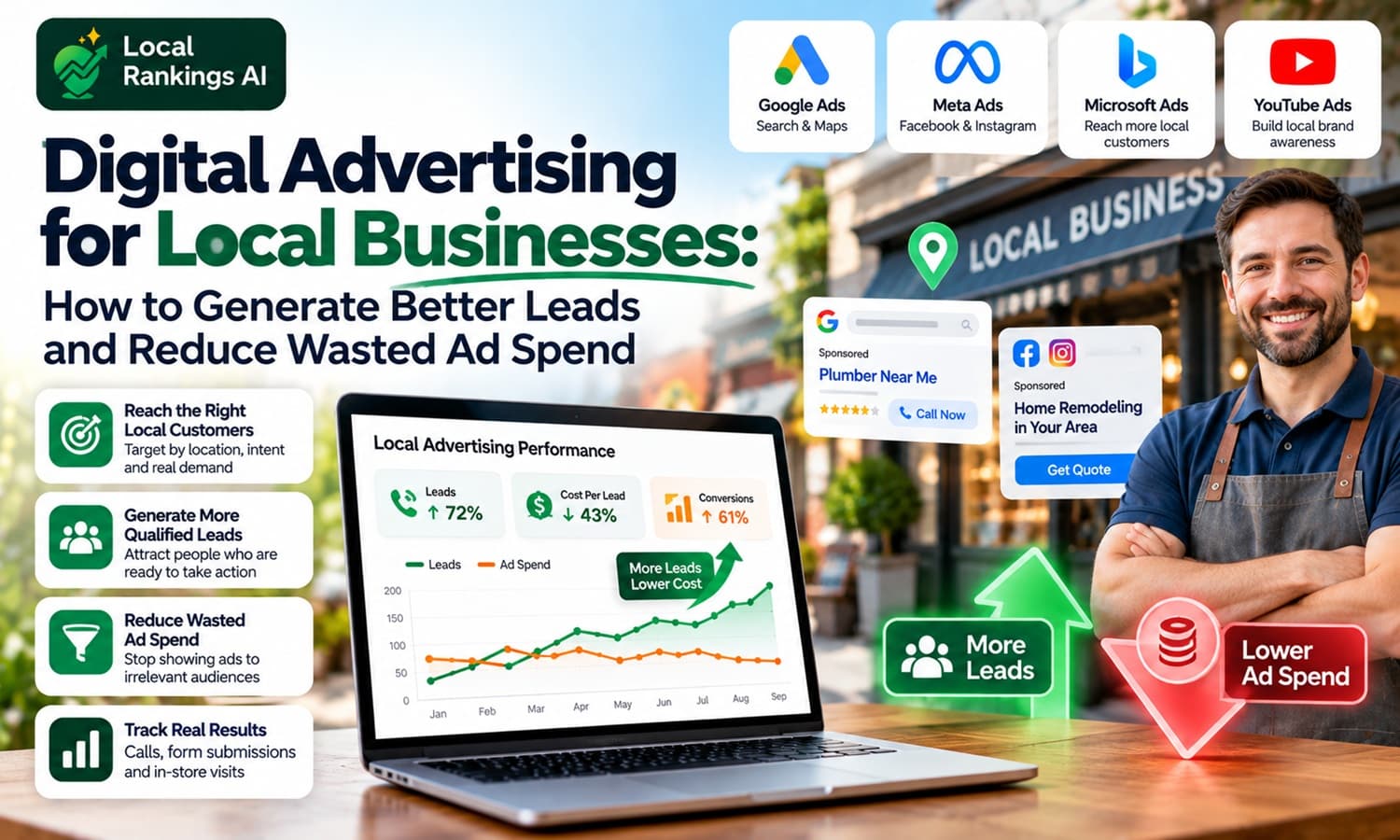
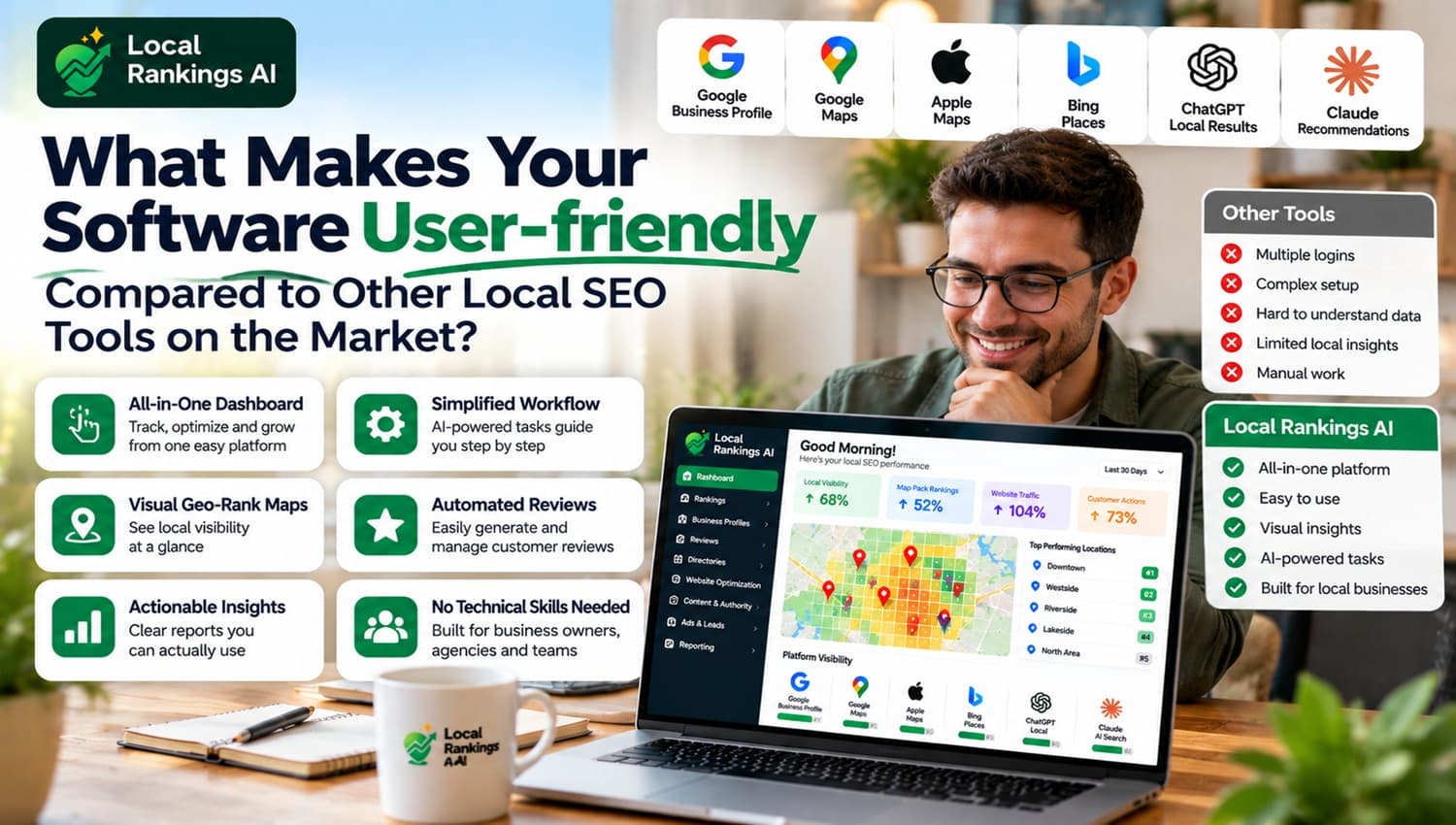
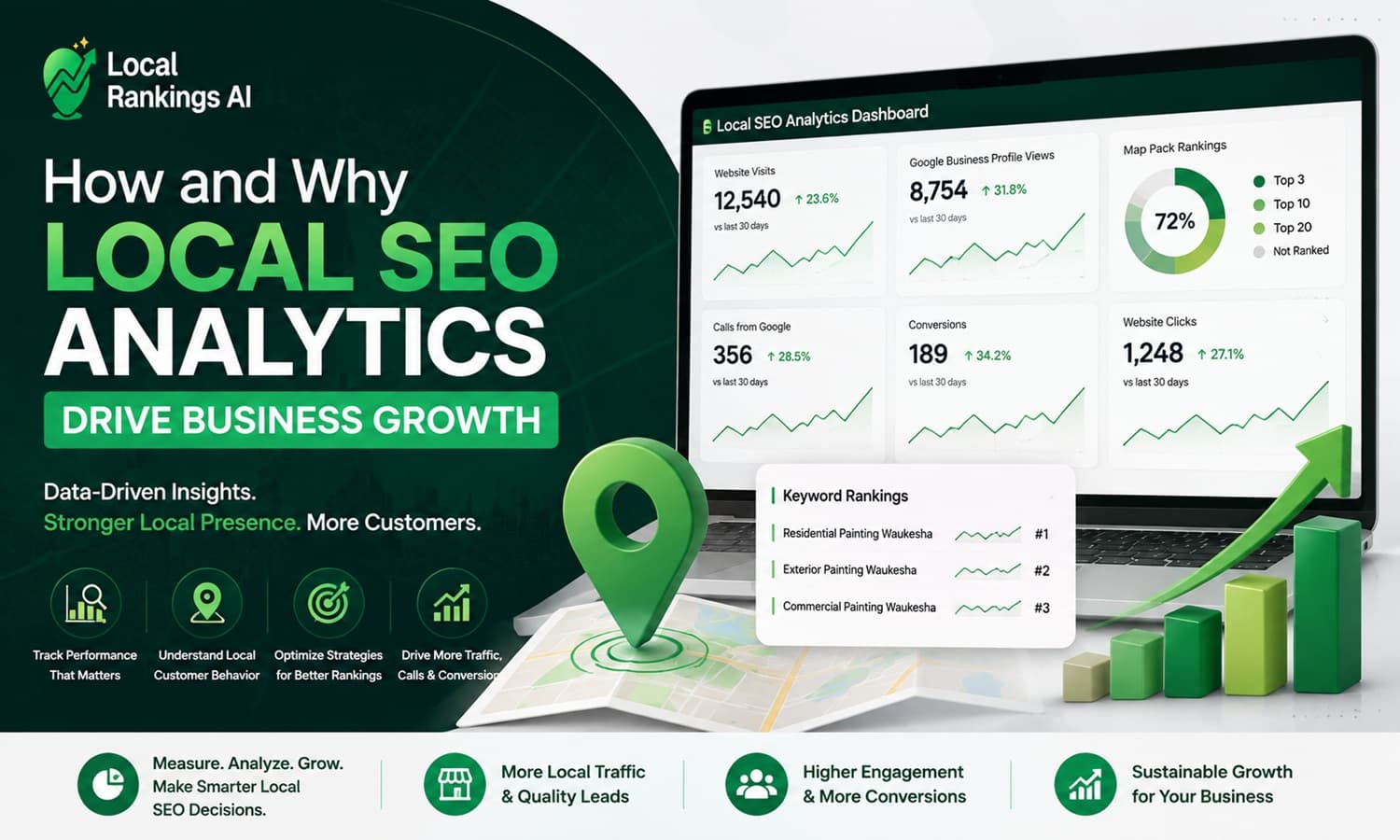
Online reputation management directly influences local search visibility. Google ratings, reviews, photos, and responses shape customer trust before a click occurs. Local Rankings AI provides tools to automate review generation and monitor sentiment, helping businesses convert positive feedback into sustainable map pack rankings.
Key Takeaways
Google ratings, reviews, photos, and responses shape customer trust before a click occurs.
A single one-star rating drop correlates with measurable lead loss for local service providers.
Search engines evaluate review signals when determining local pack placement.
Businesses with higher ratings, greater review volume, and consistent response activity consistently outrank those with neglected profiles.
Reputation Management in Local SEO is the systematic process of shaping how a business appears in local search results through review monitoring, response strategies, and sentiment amplification. Online Reputation Management (ORM) involves actions taken to manage online sentiment so that it reflects more favorably on a business's reputation. Without active management, negative feedback accumulates unchecked and drives potential customers toward competitors who appear more trustworthy in the same search results.
Before customers make a purchase decision, they search for the business online. Google ratings, reviews, photos, and owner responses form an impression long before any click or visit happens. These details shape trust and influence decisions within seconds.
How does reputation management affect local search rankings?
The connection is direct: reputation feeds visibility.
Reputation management serves two distinct purposes. First, it restores a damaged reputation by addressing negative feedback and resolving customer complaints publicly. Second, it identifies strategies to encourage the amplification of positive sentiment across review platforms. Both functions require ongoing attention rather than one-time fixes.
What are the core components of local reputation management?
Effective reputation management for local businesses rests on three pillars:
Review monitoring across Google, Bing, Apple, and Yelp to catch feedback immediately
Response management that addresses both positive and negative reviews with brand-appropriate messaging
Sentiment amplification through review generation campaigns that increase review velocity
Local Rankings AI provides AI-powered local SEO software, tools, and services to track, improve, and grow business rankings. The platform automates review requests and monitors profile health, turning reputation data into actionable ranking improvements. Businesses that neglect these components lose visibility gradually, often unaware of the decline until lead volume drops sharply.
Why do reviews affect your local rankings?
Online reviews serve as direct ranking signals that Google's local algorithm evaluates when determining which businesses appear in the map pack. Local search platforms prioritize businesses demonstrating consistent, positive customer feedback because that feedback signals relevance and reliability to the algorithm.
Reputation Management in Local SEO focuses on improving the elements that affect both credibility and search visibility. A business with frequent, recent reviews sends freshness signals that correlate with higher local pack placement. Stale or absent reviews create the opposite effect. Competitors with active review profiles capture visibility that dormant profiles lose.
How does review volume impact map pack placement?
Review count matters as much as star rating. Ranking high is not enough if reviews look thin or shaky, and a wall of five-star ratings does not help if people cannot find the business. Google's local algorithm weighs review velocity, the rate at which new reviews appear, alongside total volume. A steady stream of feedback indicates an active, operational business worthy of prominent placement.
What review management steps improve local rankings?
Businesses seeking stronger local visibility follow a structured approach to review management. The process combines automation with strategic oversight.
Audit the existing business profile across Google, Bing, Apple, and Yelp to identify gaps in review coverage.
Deploy review automation tools that prompt satisfied customers to leave feedback shortly after a transaction.
Monitor incoming reviews daily and respond to every review within 24 hours.
Analyze sentiment patterns to spot recurring complaints before they damage the overall rating.
Optimize the website and business profile with keywords that align with the services customers mention in positive reviews.
These tools transform scattered customer feedback into a structured asset that directly supports ranking performance. Without systematic management, even excellent service fails to translate into the review signals search engines require. Understandingwhy Google reviews matter for local rankings reveals the connection between customer feedback velocity and sustained map pack visibility.
How do you audit your current online reputation?
A reputation audit begins with a systematic review of every platform where customers leave feedback. The process maps current sentiment across Google, Bing, Apple, Yelp, and industry-specific directories. Businesses that skip this step lose visibility they never see reported.
Effective local SEO brings qualified local traffic to listings. Strong Reputation Management in Local SEO then proves a business is worth hiring. The audit connects these two forces by measuring what customers encounter before they ever click or call.
What does a complete review audit cover?
A thorough audit examines three dimensions of online presence. First, review volume and velocity across all major platforms. Second, average star ratings and sentiment trends over time. Third, response rates and the quality of owner replies to both positive and negative feedback.
The company's tools highlight ranking changes at a street level. These tools provide businesses actionable AI tasks to make effective changes that improve visibility. A precision geo-rank grid allows businesses to track rankings across entire service areas. The grid identifies where a business underperforms and enables action based on real geo-rank data.
How do review patterns affect local rankings?
Search engines interpret review signals as trust indicators. Consistent negative sentiment without owner responses depresses click-through rates. Unanswered complaints signal disengagement to both algorithms and potential customers.
The audit process follows five numbered steps:
Compile all business profiles from Google, Bing, Apple, Yelp, and niche directories.
Document the total review count, average rating, and most recent review date for each platform.
Analyze sentiment patterns across the last 12 months of feedback.
Audit owner response rates and measure average response time.
Compare findings against top-ranking competitors in the same service area.
The offering focuses on tracking, enhancing, and maintaining business profiles. It ensures compliance and protects user data with robust security measures. Geo-rank tracking reveals visibility gaps that standard rank checkers miss entirely.
What steps automate review generation and response?
Automated review generation and response transforms Reputation Management in Local SEO from a manual chore into a scalable growth engine. Businesses that fail to automate these workflows lose visibility and trust to competitors who respond faster. Local Rankings AI embeds automation directly into its platform, turning customer feedback into a consistent, measurable asset.
How does automated review generation work?
The platform triggers review requests at the right moment after a transaction or service completion. These requests reach customers through email or SMS, removing friction from the process. A single click directs the customer to the business's Google profile, where the review form loads immediately. This timing increases completion rates and keeps the review pipeline full without staff intervention.
What happens after reviews are posted?
Automated response workflows handle the next critical step. The system monitors review platforms and alerts the business when new feedback arrives. Pre-built response templates allow quick, professional replies to positive reviews. For negative feedback, the platform flags the review and routes it to a manager for a personalized response. This dual approach protects the brand's reputation while maintaining a human touch where it matters most.
Local Rankings AI offers two options: businesses can either use the platform independently or let the team handle optimization and monitoring. The service also simplifies proof of success into clean, client-ready documentation. AI-powered local SEO software helps businesses convert local visibility into more customers by improving rankings street by street, offering real-time geo-rank data to pinpoint blind spots and act on real signals. Campaigns are designed so both sides move together, instead of treating them as separate projects.
How do you measure reputation-driven ranking gains?
Measuring reputation-driven ranking gains requires tracking the direct connection between review activity and local search visibility. Reputation Management in Local SEO succeeds when businesses can attribute ranking improvements to specific reputation actions. Local Rankings AI provides a precision geo-rank grid that tracks rankings across entire service areas, identifying where a business underperforms and taking action based on real geo-rank data.
What metrics link reviews to local ranking changes?
Three core metrics reveal the reputation-ranking relationship. First, review velocity measures the rate of new reviews appearing on Google Business Profiles. Second, average star rating shifts correlate with map pack position changes. Third, review response rates and response times influence engagement signals that search algorithms evaluate.
Establish a baseline geo-rank position before launching reputation campaigns.
Track weekly review volume and average rating across all monitored locations.
Correlate ranking fluctuations with review spikes using the company's street-level ranking tools.
Document ranking improvements alongside review growth in client-ready reports.
How long before reputation efforts impact local rankings?
Reputation-driven ranking gains rarely appear overnight. Consistent review generation over 30 to 90 days typically produces measurable movement in local search results. The company's tools highlight ranking changes at a street level, providing businesses actionable AI tasks to make effective changes that improve visibility. Without systematic tracking, businesses lose the ability to prove which reputation investments deliver returns.
Local Rankings AI simplifies proof of success into clean, client-ready documentation. The platform converts local visibility into more leads and customers by offering features to optimize website and Google Business Profiles. For businesses monitoring these shifts, local business keyword tracking software captures the granular location data that generic rank trackers miss.
Frequently Asked Questions
Conclusion
Reputation management in local SEO is not a passive activity; it requires systematic review generation, response automation, and geo-rank tracking to produce measurable ranking gains. Businesses that implement these five audit steps and monitor review velocity, rating shifts, and response rates over 30 to 90 days will see their local visibility improve street by street. The next step is to establish a baseline geo-rank position and begin tracking the direct connection between reputation actions and search performance.