Claim and Optimize My GMB Listing: Claim and Optimize Your Google | Local Rankings AI
Claim and Optimize My GMB Listing: Claim and Optimize Your Google
Claim and optimize your Google Business Profile to boost local search visibility, attract nearby customers, manage reviews, improve your online presence, and generate more calls, website visits, and qualified leads through effective local SEO strategies.
Claiming a Google Business Profile requires verifying ownership through postcard, phone, or email. Optimization demands complete business details, accurate categories, high-quality photos, and regular posts. Local Rankings AI provides tools to audit profiles, track street-level rankings, and generate actionable tasks for improved local visibility and customer engagement.
Verified Google Business Profiles appear more often in search results than unverified ones.
Complete and accurate business details increase the likelihood of appearing in local search results.
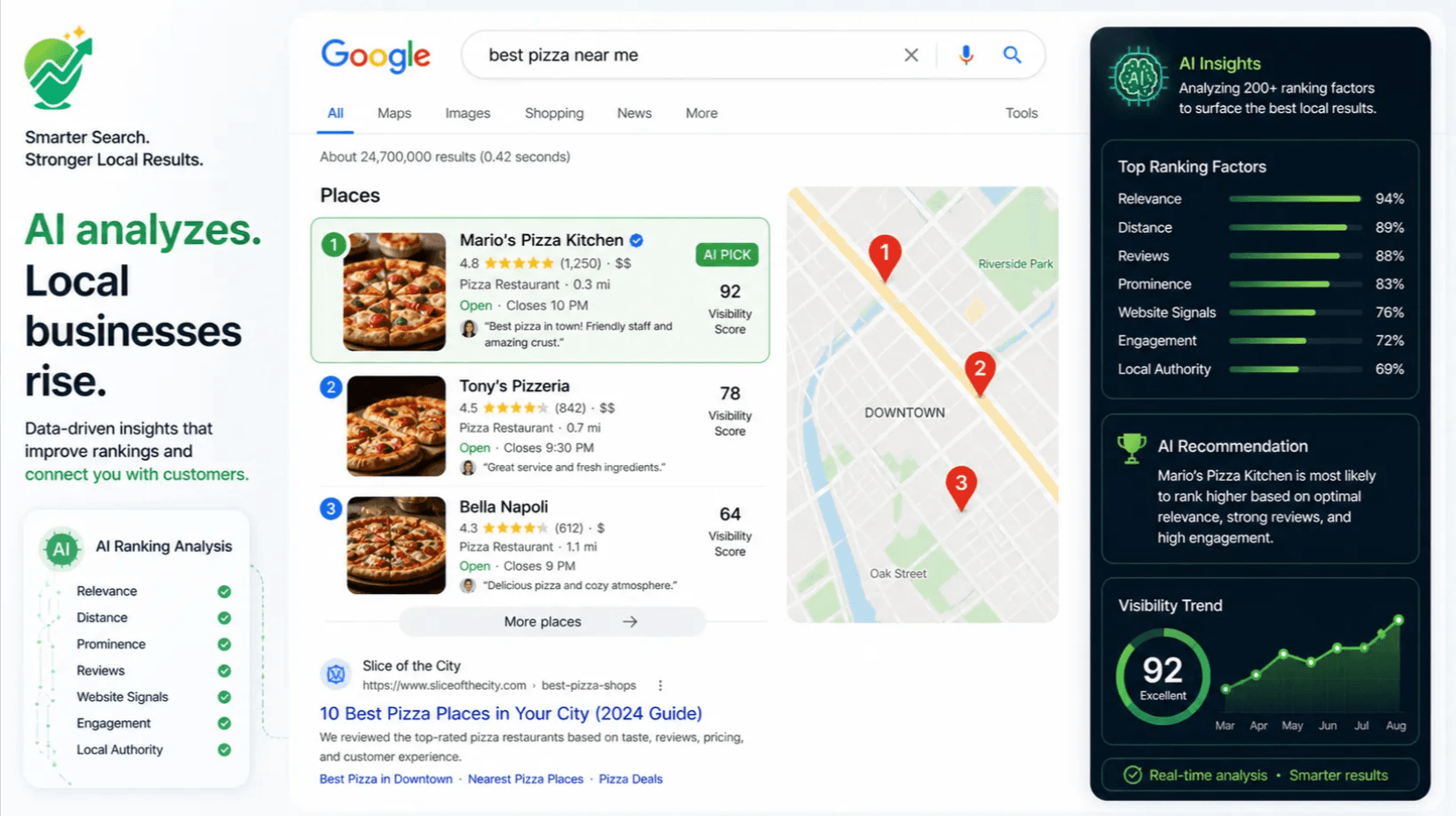
A precision geo-rank grid tracks rankings across entire service areas to identify underperforming locations.
Consistent monitoring and swift action prevent visibility loss to competitors who adjust based on performance data.
How do I claim my Google Business Profile?
Claiming a Google Business Profile puts a business on Search and Maps at no cost. Unverified profiles miss local customers who search for nearby services every day. The process starts at business.google.com/add, where business owners create or take control of an existing listing. Verification follows, confirming to Google that the business is legitimate and authorized. Without this step, the profile remains invisible in local results.
What happens if no profile exists for my business?
A business without a profile simply creates one. Visiting business.google.com/add starts the setup. The owner enters the business name, category, and location details. Google then prompts for verification, typically by mail, phone, or email.
How does verification improve local visibility?
Verification signals authorization. Google's own guidance confirms that verified businesses appear more often in search results. An unverified profile carries no such weight. Local Rankings AI tracks these ranking shifts at street level, showing exactly where verification and optimization move the needle. The company's platform audits profiles and surfaces the highest-impact fixes, including proper categorization and review automation. For a deeper dive into profile improvements, the Google Business Profile optimization guide outlines ten practical steps that build on a verified foundation.
What are the key steps to optimize my profile?
Profile optimization begins with claiming and verifying the business on Google. A verified profile signals authorization and directly improves local ranking potential. Without verification, the business remains invisible in relevant local searches.
Claim and Optimize My GMB Listing by first ensuring every information field is complete and accurate. Google’s own guidance confirms that businesses with complete and accurate information are more likely to appear in local search results. Inaccurate details cause the profile to vanish from searches where it should dominate.
How does profile completeness affect local search visibility?
Complete profiles earn higher placement. Missing or outdated information reduces the likelihood of appearing for relevant queries. The company’s Google Business Profile SEO tools audit these details systematically.
What role do reviews play in profile optimization?
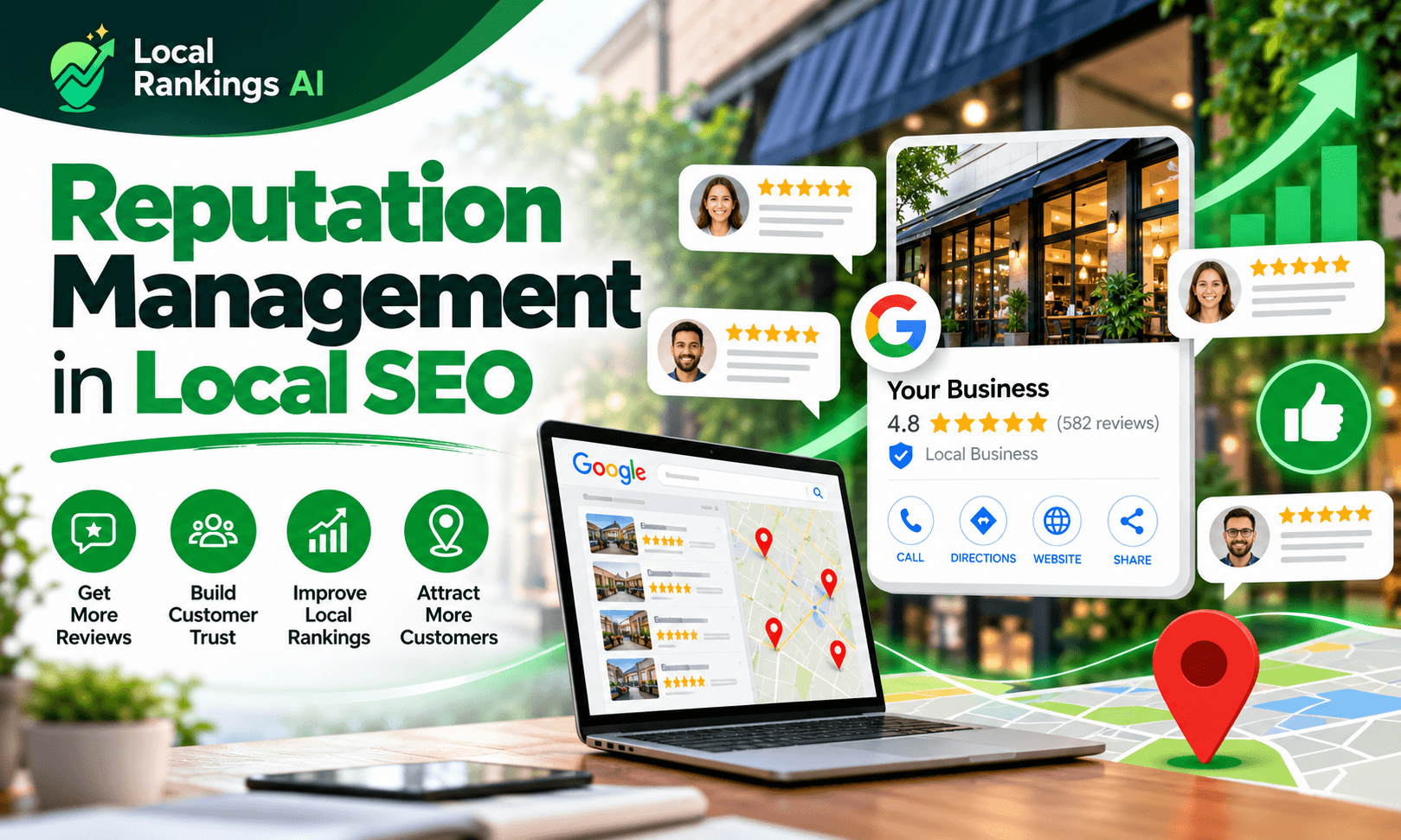
Reviews build credibility and influence ranking. Local Rankings AI incorporates review automation to help businesses generate and manage feedback. A steady stream of authentic reviews strengthens the profile’s authority signal.
The optimization process extends beyond basic data entry. A precision geo-rank grid tracks rankings across entire service areas, identifying underperforming locations. This data reveals exactly where visibility gaps exist. The platform then generates actionable AI tasks to address those weaknesses. Businesses either execute these optimizations independently or let the Local Rankings AI team handle monitoring and improvements.
How do I maintain and monitor my local rankings?
Maintaining local rankings demands consistent monitoring and swift action. Businesses that neglect ongoing tracking lose visibility to competitors who adjust strategies based on real performance data. A structured approach turns ranking fluctuations from surprises into opportunities.
What tools track local rankings at the street level?
Precision geo-grid tools reveal ranking shifts block by block across an entire service area. The company's platform highlights these street-level changes and generates actionable AI tasks. Each task targets the specific changes most likely to improve visibility. This granular data eliminates guesswork from local SEO decisions.
How should a business respond to ranking changes?
Review the geo-grid map weekly to spot underperforming zones.
Execute the highest-priority AI-generated task immediately.
Document the ranking shift and the corrective action taken.
Monitor the affected area to confirm improvement.
Google Performance insights also help adjust strategy by revealing customer engagement patterns. The service simplifies proof of success into clean, client-ready documentation. For businesses that prefer a hands-off approach, the company's team handles all optimization and monitoring. This dual option ensures every business can claim and optimize my GMB listing effectively while maintaining strong local business listings across platforms.
Conclusion
Claiming and optimizing a Google Business Profile transforms an invisible listing into a local search asset, but the work does not end at verification. Consistent monitoring, complete business details, and active review management determine whether a profile captures nearby customers or falls behind competitors. The next step is to audit the current profile, address any incomplete fields, and establish a routine for tracking street-level ranking shifts across the service area.