Local SEO Content Guide: Optimize Your Website for Local Search | Local Rankings AI
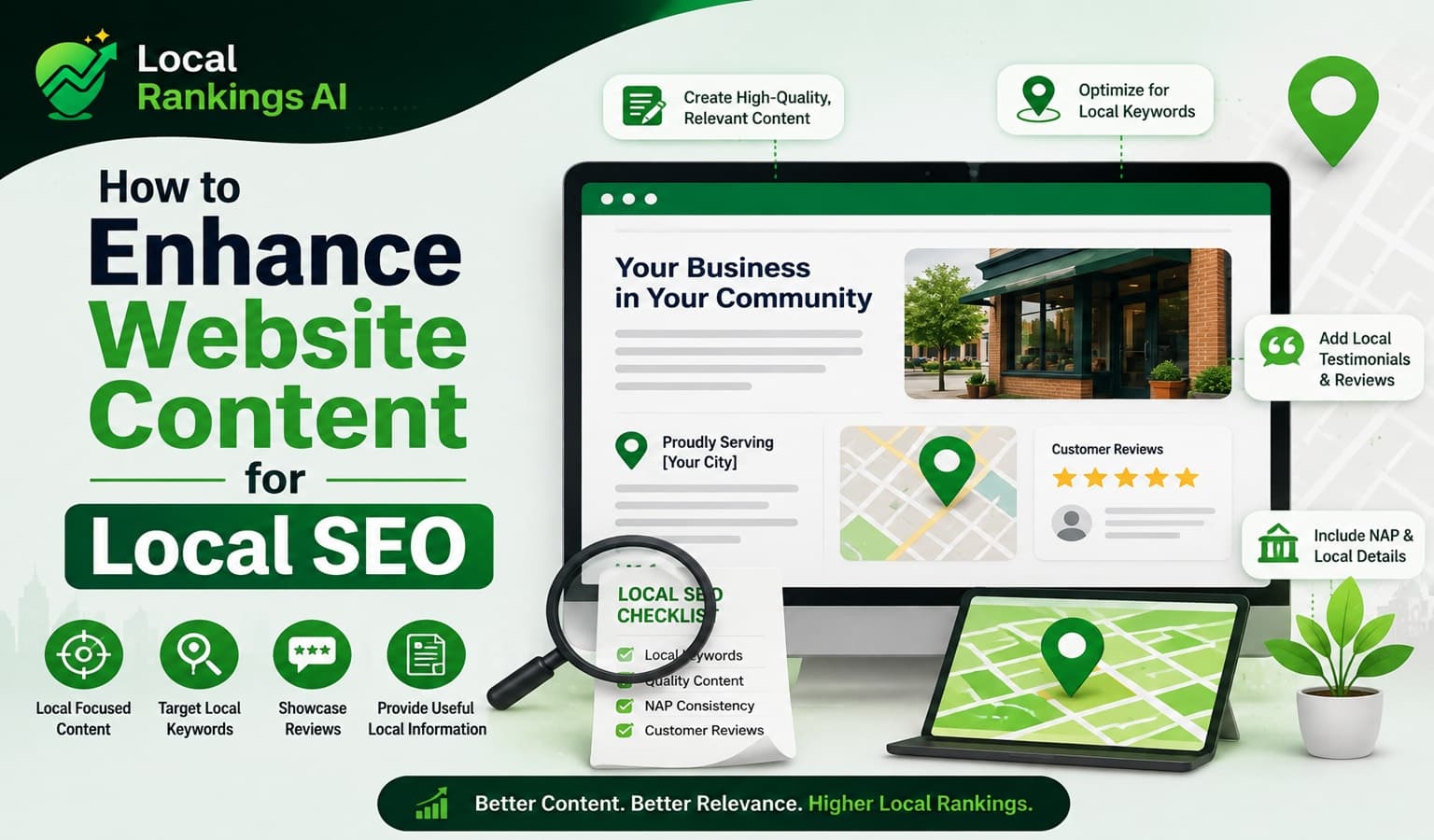
How to Enhance Website Content for Local SEO
Local SEO content improves when businesses embed neighborhood names, target location-specific keywords, and root edits in street-level ranking data. This guide covers diagnosing visibility gaps, rewriting pages for local relevance, and proving results with real ranking data — not guesswork.
Local SEO improves when businesses embed city and neighborhood names naturally within headings, service pages, and meta descriptions. Google Business Profile integration, localized schema markup, and 500+ words of location-specific content boost rankings. Customer testimonials mentioning specific areas, local phone numbers, and embedded Google Maps strengthen relevance signals significantly.
Optimization of local content matters significantly, since 46% of all internet searches carry local intent. Target location-specific keywords, embed city or neighborhood names naturally within page copy, and create dedicated pages addressing local customer needs to strengthen geographic relevance and improve search visibility.
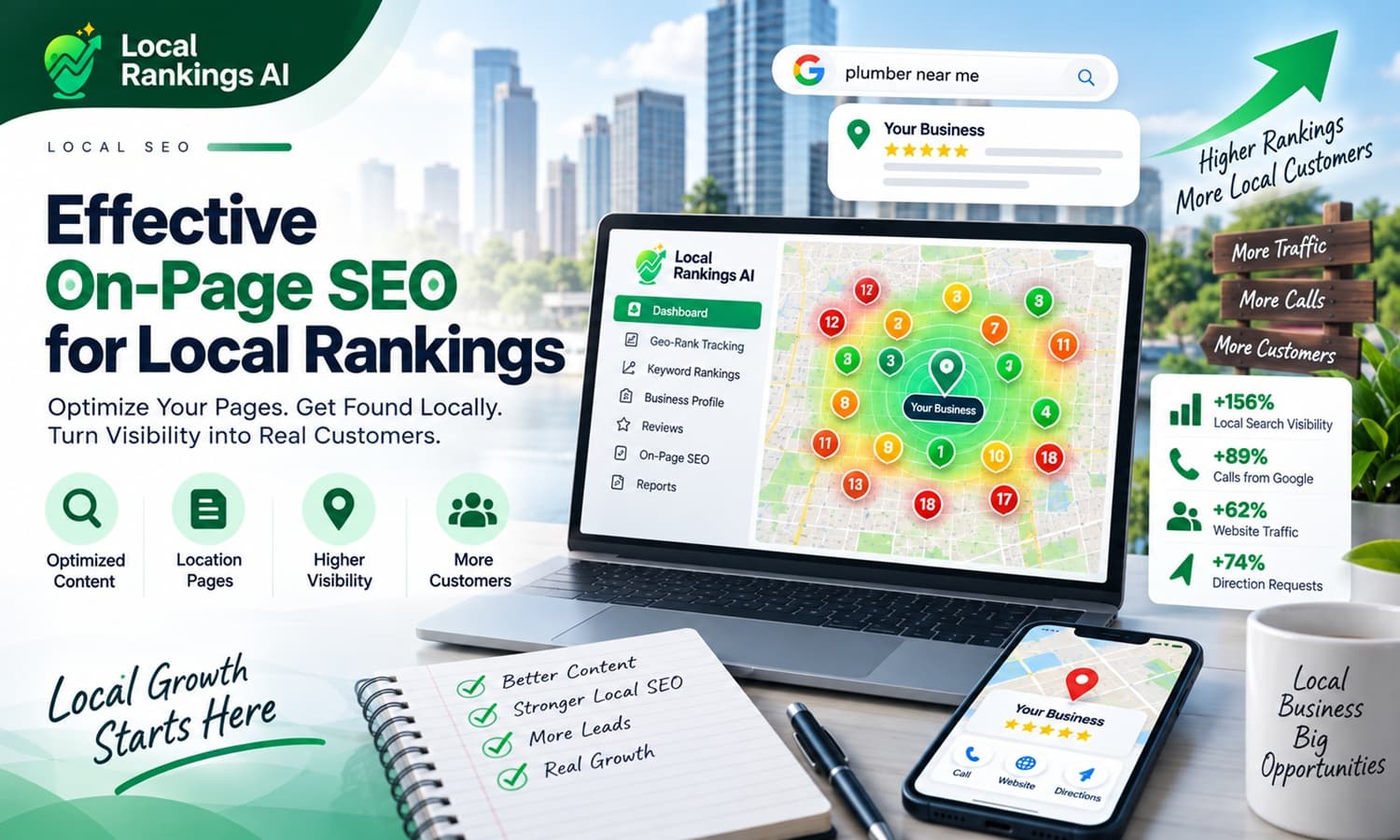
Local SEO content improves when pages target neighborhood-specific keywords, service-area terms, and location pages instead of generic copy. Local Rankings AI's geo-rank grid identifies which streets and neighborhoods underperform, so content writers can prioritize updates by area. Adding location details, local landmarks, and city-specific service descriptions strengthens relevance signals Google uses to match search intent.
Key Takeaways
Local search accounts for 46% of all internet searches, making geographic optimization essential for business visibility.
Research customer search phrases directly through Google and Bing search suggestions before finalizing content keywords.
Local SEO strategies drive traffic and revenue growth for businesses of all sizes, not just small enterprises.
Implement a structured content planning strategy specifically designed for local business audiences to increase conversion rates.
What Do You Need Before You Start?
Street-level ranking data comes first. Business owners preparing to revise their site content need to know exactly where their pages already rank, block by block. Search visibility rarely looks the same across an entire service area. A single search from a store or office chair tells an incomplete story.
Why doesn't my own search result match what customers see?
Business owners often check their own rankings by typing their company name into Google, then assume that result reflects reality. It doesn't. What an owner sees when searching their own business often differs sharply from what a customer three miles away sees. Location, search history, and device all shift the results.
A free rankings map solves this blind spot before any content gets rewritten. This tool should show:
Where the business currently appears in local results
Where competitors take over instead
Which next actions improve visibility fastest
Local relevance also matters at scale. Nearly 46% of all internet searches carry local intent, meaning content edits without geographic context miss almost half the audience actively searching nearby. Enhancing website content for local SEO starts with this diagnostic groundwork, not with new copy. Content decisions made without ranking data amount to guesswork dressed up as strategy.
How Do You Rewrite Pages For Local Relevance?
Rewriting a page for local relevance starts with matching content to the exact language nearby customers type into Google and Bing. Enhancing website content for local SEO requires more than swapping in a city name once per page. Local content work differs from general website SEO because it targets traffic, visibility, and brand recognition within one defined community rather than a national audience.
Follow these steps in order:
Search Google and Bing for the core service term before hitting enter, then note the related phrases that autocomplete suggests. These reflect what nearby customers actually search.
Build a dedicated page for each distinct local topic uncovered in that research, rather than cramming every term onto one page.
Weave neighborhood names, landmarks, and service-area details into headings and body copy naturally, not just in a footer.
Align on-page language with Google Business Profile categories and services, since a well-optimized profile helps Google match the business to relevant local searches.
Review ranking data by street or block, then prioritize rewrites on pages showing the weakest local visibility first.
Pages closest to the top of local results but not yet ranking first typically respond fastest to targeted edits. Small businesses see the best return by fixing thin, generic pages before writing new ones.
Does every page need a location mention?
No — only pages tied to a specific service area or neighborhood search need geographic detail. Forcing location terms onto unrelated pages weakens relevance instead of strengthening it.
How Do You Prove And Troubleshoot Your Results?
Proof starts with data, not impressions. A single search from one office computer tells a business owner almost nothing, since rankings shift block by block across a service area. That single-search habit is the most common mistake in judging whether enhancing website content for local SEO actually worked. The fix requires checking performance across the entire coverage zone, not just one ZIP code.
Why doesn't my ranking match what I see when I search?
Personal search results get filtered by location history, device, and prior clicks, so they rarely reflect what a stranger three miles away sees. A business owner searching from their storefront often ranks well locally while sitting far lower a few neighborhoods over.
How do businesses document ranking wins for clients or stakeholders?
Once content updates move the needle, those gains convert into clean, client-ready proof rather than raw spreadsheets. Owners can choose to manage this tracking themselves or hand monitoring and execution to a dedicated team. Either path starts the same way: generate a live rankings map in under 60 seconds, no credit card required, then retest after each content change.
Frequently Asked Questions
Conclusion
Enhancing website content for local SEO isn't a one-time rewrite — it's an ongoing cycle of checking street-level ranking data, closing the gaps between what an owner sees and what customers actually find, and prioritizing edits on the pages with the weakest visibility first. Businesses that root their content decisions in real ranking data, rather than a single self-search, consistently outperform competitors still guessing at what local customers are searching for. Start with the diagnostic, rewrite with intent, then retest to confirm the changes actually moved the needle. Local Rankings AI supports this process directly: its geo-rank grid pinpoints exactly which streets and neighborhoods need attention, and its AI tasks flag the specific content changes most likely to improve a page's position, so businesses spend less time guessing at wording and more time publishing pages that match what local customers are actually searching for.