Google Business Profile Optimization: 10 Essential Steps to Rank Higher in Local Search | Local Rankings AI
Google Business Profile Optimization: 10 Essential Steps to Rank Higher in Local Search
Discover 10 practical Google Business Profile optimization strategies to improve your local SEO rankings, attract more customers, increase visibility in Google Search and Maps, manage reviews, and maximize your business's online presence.
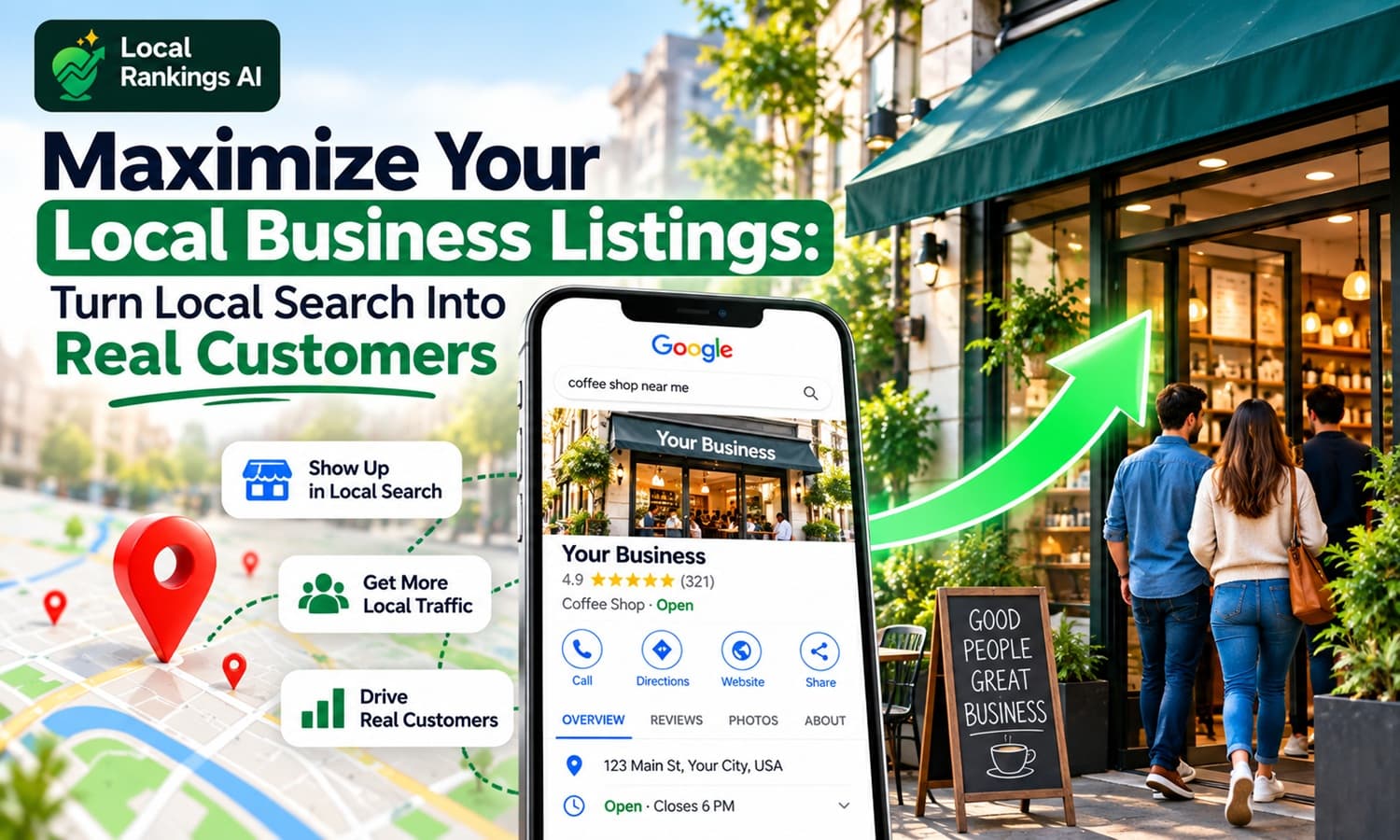
A well-crafted Google Business Profile (GBP) is one of the most powerful tools a local business has for getting found online. This guide walks through the essential steps to optimize your GBP so you show up more often — and more prominently — in local search results. As shoppers increasingly rely on local search and map results, small differences in profile quality can drive big differences in calls, clicks, and visits.
Below, you’ll find ten focused, actionable steps covering everything from accurate NAP (Name, Address, Phone) listings and citation management to meaningful content updates and review strategies.
Here are the 10 essential steps for optimizing a Google Business Profile (GBP) to rank higher in local search:
Choose the Right Primary Category: Select the most accurate primary category for your business to help Google understand your services.
Add Relevant Secondary Categories: Include all applicable secondary categories to broaden your visibility in related searches.
Upload High-Quality Photos Regularly: Use real, high-quality images to engage potential customers and enhance your profile's attractiveness.
Post Weekly Updates and Offers: Keep your profile active by sharing updates, promotions, and news to signal relevance to Google.
Encourage and Respond to Reviews: Actively request reviews from customers and respond to them to build trust and improve your ranking.
Use Keywords Naturally in Your Business Description: Incorporate relevant keywords in your business description to enhance search visibility without keyword stuffing.
Keep Your Hours Updated: Ensure your business hours are accurate and reflect any changes to avoid customer frustration.
Add Products and Services with Descriptions: Clearly list your offerings with detailed descriptions to inform potential customers and improve search relevance.
Enable Messaging for Direct Customer Interaction: Allow customers to message you directly through your profile for better engagement and customer service.
Monitor Insights and Adjust Strategy: Regularly check performance insights to understand traffic sources and adjust your strategy based on what works best.
Choose the Right Primary Category
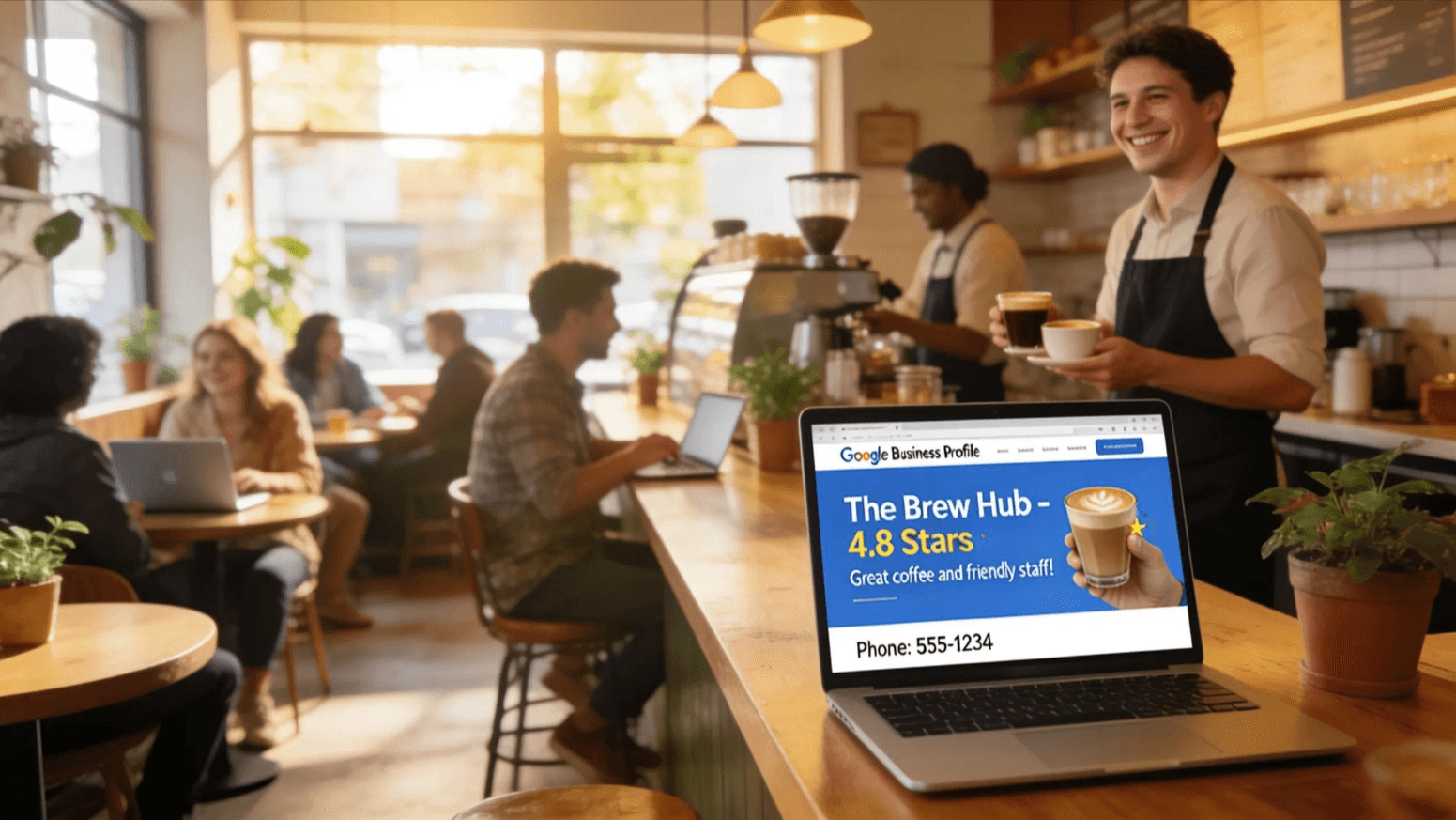
Choosing the right primary category is essential for accurately representing your business to Google. This decision helps Google categorize your business effectively, influencing how users find your services when searching online. For instance, selecting “Coffee Shop” as a primary category will ensure your business appears in searches for coffee-related services, which is critical for attracting the right customers.
Consider your main offerings and the customer intent behind searches. The correct primary category positions your business in front of potential customers actively searching for the services you provide. Additionally, keep in mind that the primary category should reflect a comprehensive overview of your business, aiding in higher rankings in local search results.
Local Search Optimization for Retailers: Enhancing Organic Traffic and Conversion Rates
This research aims to substantiate the significance of local search engine optimization for retailers in boosting organic traffic. It provides actionable insights and practical recommendations for retailers to optimize their Google presence as an integral component of an effective marketing strategy. Furthermore, the study develops a typical valid data micromarketing schema, exemplified by a Ukrainian retailer, designed to secure a prominent position within the Google Local Pack, thereby increasing organic traffic and conversion rates.
Business optimization in the digital age: Insights and recommendations, A Natorina, 2020
Add Relevant Secondary Categories
In addition to a primary category, adding relevant secondary categories broadens your visibility. These categories allow you to capture a wider audience by appearing in searches that may not directly correspond to your primary category. For example, if your business is primarily a bakery, secondary categories might include “Coffee Shop” or “Catering Service.”
This approach enhances your chances of appearing in multiple relevant searches, connecting you with more potential customers. Regularly review and update these categories to adapt to any changes in your offerings or market demand.
Upload High-Quality Photos Regularly
High-quality images on your Google Business Profile can significantly improve engagement. Visual content attracts potential customers, significantly enhancing their first impression of your business. Regularly updating your photos with new images of your products, services, and locations helps to maintain interest and reflects your business's active presence.
Photos also serve as a way to showcase your brand personality and professionalism. Studies indicate that businesses with photos receive 42% more requests for directions and 35% more click-throughs to their websites. Thus, making a habit of uploading fresh content can positively influence local SEO efforts.
Post Weekly Updates and Offers
Keeping your profile active with regular updates and special offers can signal to Google that your business is engaged and relevant. Posting weekly not only informs customers about new products or services but also enhances your ranking in local searches. Google favors profiles that provide fresh content, as it indicates a dynamic business.
Consider sharing seasonal promotions, discounts, and news that relate to your business's growth. This strategy can create a sense of urgency, encouraging potential customers to act quickly to take advantage of your offers.
Encourage and Respond to Reviews
Customer reviews play a vital role in local search ranking. Actively requesting feedback and responding to reviews can build trust and foster relationships with customers. Businesses that engage with their reviewers often report higher levels of customer satisfaction and loyalty.
The Significance of Ranking Within Google's Local 3-Pack
Analysis reveals that 46% of all Google search queries exhibit local intent. For instance, a user might input 'plumber near me' or 'best coffee shop downtown,' prompting Google Maps to determine the top three businesses displayed. Exclusion from this 'Local 3-Pack' renders a business virtually imperceptible to nearly half of its prospective clientele.
How to Rank Higher on Google Maps: A Local SEO Guide, G Tiwari, 2020
Encouraging reviews can be done through follow-up emails, thank-you messages, or even in-store prompts after delivering exceptional service. Responding to reviews acknowledges customer feedback and highlights your commitment to service excellence.
Review Strategy
Approach
Impact
Encourage Reviews
Send follow-up emails to customers
Increases volume of positive reviews
Respond to Reviews
Reply to both positive and negative feedback
Builds trust and customer loyalty
Highlight Reviews
Feature testimonials in posts
Enhances credibility and attracts new customers
Regularly monitoring and managing reviews will also help you understand your customer’s experiences, allowing for continuous improvement in your operations.
Use Keywords Naturally in Your Business Description
Incorporating keywords into your business description enhances your search visibility without falling into the trap of keyword stuffing. Effective use of keywords allows Google to connect your business with relevant search inquiries. It’s vital to utilize natural language that reflects your business's unique offerings.
Focusing on specific phrases that your target audience might use in their searches can strengthen your visibility. Relevant keywords should be integrated seamlessly to avoid detracting from the quality of your business description, ensuring clarity and professionalism.
Keep Your Hours Updated
Accurate business hours are essential for customers to know when they can contact or visit your business. Failing to update your hours can lead to frustration for potential customers. Additionally, Google favors active profiles that maintain accurate information, which can improve your local search ranking.
Consider seasonal changes or occasional closings to manage expectations effectively. Keeping your hours up-to-date reflects reliability and enhances customer trust, leading to improved satisfaction and loyalty.
Add Products and Services with Descriptions
Clearly listing your products and services with detailed descriptions allows potential customers to fully understand what you offer. Use clear language and include relevant details to improve local search visibility. This information not only informs but also engages potential customers, encouraging them to choose your business.
Effective descriptions should include enticing elements that highlight benefits, features, and any special offers associated with your services. This can significantly enhance your profile's relevance in local search results, attracting more inquiries and conversions.
Enable Messaging for Direct Customer Interaction
Enabling messaging on your GBP facilitates direct communication between you and your customers. This valuable feature allows potential clients to ask questions and receive immediate responses, enhancing customer engagement. Quick communication fosters a welcoming atmosphere and encourages potential customers to move forward with their purchasing decisions.
By providing this level of accessibility, you demonstrate excellent customer service practices, which is increasingly vital for modern consumers. This strategy can bridge the gap between online inquiries and sales, significantly impacting overall conversion rates.
Monitor Insights and Adjust Strategy
Regularly monitoring performance insights allows you to understand how customers engage with your GBP and adjust your strategies effectively. Insights provide valuable data on how users find your business and interact with your listings. This data can guide your decisions on which areas need improvement or fine-tuning.
For example, if you notice a high volume of calls but low click-through rates to your website, it may indicate that your profile is clear, but further work is needed on your website’s content. Adjusting your approach based on these insights ensures your strategies remain effective and aligned with your business goals.
Local SEO Rankings offers tools to track these metrics and provides insights into how to optimize your presence further. Sign up for Done-For-You management or opt for our self-service software to get started on refining your Google Business Profile optimization strategies.
How do you set up an effective Google Business Profile for local SEO?
Think of your GBP as a digital storefront: it should be complete, accurate, and easy for customers — and Google — to understand. Filling out every relevant field, keeping hours and services current, and using precise business categories all improve how often and where your listing appears. Consistency and attention to detail are the quickest paths to better local visibility.
Local Optimization for Retailers: Boosting Organic Traffic and Conversion
This research demonstrates the value of local optimization for retailers: when businesses make targeted changes in their Google presence, organic traffic and conversions rise. The study offers practical recommendations and a sample microdata approach (based on a Ukrainian retailer) to improve placement in the Local Pack versus competitors and to increase organic traffic and conversion.
Business optimization in the digital age: Insights and recommendations, A Natorina, 2020
What are the key elements to include for accurate NAP details?
Accurate NAP — the official business name, a consistent physical address, and a working phone number — is the foundation of local SEO. Make sure the name matches your storefront and legal listings, the address is formatted consistently across directories, and the primary phone number is monitored. Regular checks and fixes to any inconsistencies will reduce confusion for customers and signal reliability to search engines.
How does AI-driven optimization improve Google Maps listing accuracy?
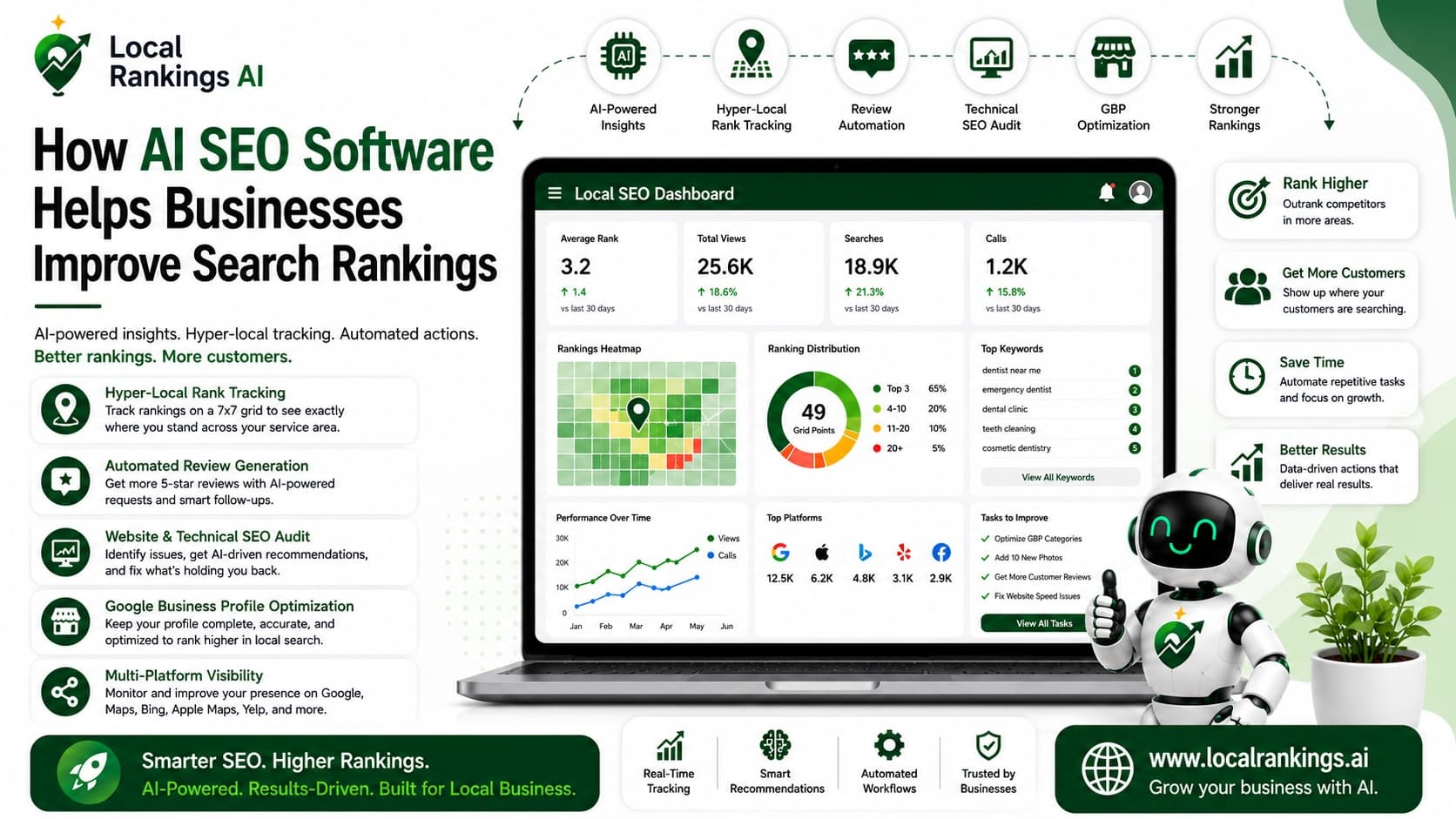
Local SEO AI tools speed up updates and reduce human error by detecting and correcting mismatches across listings in real time. They can surface outdated hours, duplicate entries, or conflicting contact info and push synchronized updates across platforms. For multi-location businesses, automation keeps data consistent and frees your team to focus on customer-facing work.
What are the best practices for citation building and ensuring NAP consistency?
Citation building matters because consistent listings across directories validate your business to both users and search engines. Create a prioritized list of high-value directories, ensure the information is identical on each, and track changes over time. A disciplined citation strategy reduces ranking friction and builds local authority.
Which citation sources impact local search rankings most?
Focus first on the platforms that carry the most weight for local discovery and consumer behavior:
Google Business Profile: Your primary listing — the one that appears in Maps and the Local Pack.
Yelp: A major review site that drives search visibility and customer traffic.
Facebook: A widely used platform that also functions as a local listing for many users.
Keeping these listings accurate and active gives you the broadest reach and the best chance of ranking well locally.
How can businesses automate local listing management effectively?
Use a local listing management tool that supports bulk updates, monitoring, and reporting. Good platforms let you push consistent data to dozens of directories, flag mismatches automatically, and provide metrics so you can measure impact. Automation reduces manual workload and improves long-term data hygiene.
How to optimize Google Business Profile content and posts for enhanced local visibility?
Your GBP content should speak directly to local customers: include service-area details, relevant local keywords, and timely posts about offers or events. Regular, well-targeted updates show activity and relevance, which can improve visibility for location-based queries.
What localized keyword strategies boost Google Business Profile visibility in 2027?
Start with keywords customers actually use: combine service terms with neighborhood or city names (for example, “urgent care Brooklyn” or “brunch cafe downtown”). Add those phrases to service descriptions, posts, and FAQs naturally. Keep your language clear and specific — avoid keyword stuffing and focus on matching search intent.
How should businesses use posts and media to engage local customers?
Use posts for limited-time offers, events, seasonal updates, and community news. High-quality photos and short videos help listings stand out, and clear calls to action — like “Book now” or “Call today” — drive conversions. Track engagement to learn what types of content resonate locally.
Optimizing a Google Business Profile is a proven way to strengthen a company’s digital footprint, especially for small and micro businesses looking to grow sustainably.
Enhancing MSME Skills with Google Business Profile for Sustainability
This program helps MSME partners of MeykeTalentCookies Balikpapan learn to use Google Business Profile for more sustainable business practices. Through workshops, hands-on sessions, and follow-up, participants improved their ability to create and manage GBP and Maps listings. Qualitative evaluation showed higher engagement and greater independent use of the platform, which supports better visibility and competitiveness.
Strengthening the Capacity of Micro Enterprises Through Google Business Profile-Based Digitalisation Strategies, D Martiyanti, 2026
If you’d rather not manage every detail yourself, professional services and tools can handle routine optimization and monitoring. Local Rankings AI offers automation and expert support so you can keep profiles accurate and focused on driving customers to your door.
What role do reviews and reputation management play in ranking higher locally?
Reviews influence both customer decisions and local rankings. A steady flow of authentic reviews builds trust and signals activity to Google. Managing reputation means soliciting feedback, responding to reviews promptly, and resolving issues in public-facing ways that demonstrate professionalism.
How do review velocity and diversity influence Google Business Profile rankings?
Review velocity — the rate at which you collect new reviews — and diversity across reviewers and platforms both matter. Regular, genuine reviews suggest an active, trustworthy business. A mix of recent reviews from different customers and sources strengthens your profile’s credibility in local search.
What are effective review response best practices to improve local SEO?
Respond quickly and courteously: thank customers for positive feedback and address complaints with empathy and clear next steps. Public, constructive responses show prospective customers you care and provide fresh signals of engagement for Google.
How to track and analyze your Google Business Profile performance for continuous improvement?
Track profile metrics regularly to see what’s working and where to improve. Use Google’s insights alongside your analytics tools to review impressions, actions, and engagement. Data-driven adjustments — informed by what users click and how they behave — keep your GBP competitive.
Which KPIs should you monitor using Google Search Console and SEO tools?
Key metrics to follow include:
Search impressions: How often your listing appears in searches.
Click-through rate (CTR): The percentage of searchers who click your listing.
Customer actions: Calls, direction requests, website visits, and bookings.
Monitor these KPIs and tie them to specific updates you make so you can measure impact over time.
How often should you audit and update your local business profile in 2027?
Audit your GBP every few months and update it whenever hours, services, or contact details change. Frequent posts and periodic content refreshes keep your listing current and signal ongoing relevance to both customers and search engines.
Frequently Asked Questions
Conclusion
Optimizing your Google Business Profile delivers clear local benefits: better accuracy, stronger engagement, and improved visibility in local search. Implement these best practices to make your profile work harder for your business, or let our team and tools handle the ongoing optimization so you can focus on serving customers. Ready to boost your local search performance? Start with a profile audit and prioritized action plan today.


.png&w=3840&q=75)