Maximize Growth with Effective Local SEO Reporting Solutions | Local Rankings AI
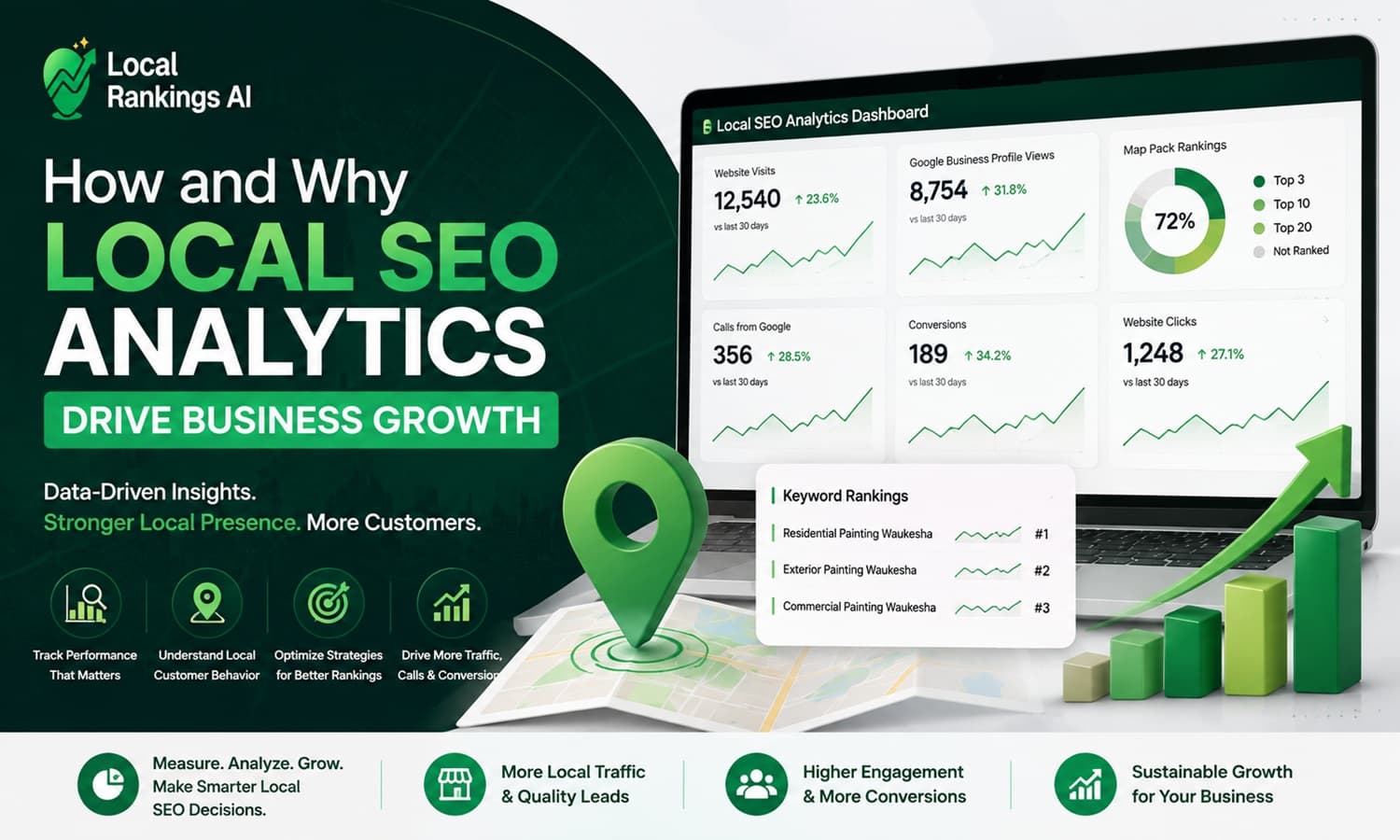
How and Why Local SEO Analytics Drive Business Growth
Local SEO analytics help businesses turn search data into measurable growth. Discover how tracking local rankings, Google Business Profile visibility, website traffic, customer engagement, and conversions can help you make smarter SEO decisions and attract more local customers.
Local SEO analytics like Google Business Profile Insights track calls, direction requests, and website clicks to reveal customer behavior patterns. Businesses monitoring these metrics weekly identify top-performing keywords, optimize listings for 3-pack rankings, and reallocate budget toward high-converting channels—driving measurable revenue
Google Business Profile optimization, local keyword targeting, and review tracking form the analytics foundation. SEO ranked among the top ROI-driving marketing channels in HubSpot's 2025 State of Marketing report. Monitor these metrics consistently to boost local search visibility, increase conversion rates, and drive measurable business growth.
Business growth from local SEO analytics requires tracking street-level ranking data across an entire service area, not just one storefront address. Local Rankings AI's geo-rank grid pinpoints underperforming zones, converts findings into prioritized AI tasks, and packages results into client-ready reports, turning raw visibility metrics into measurable lead and revenue gains.
For businesses managing several locations, this kind of local SEO dashboard becomes even more valuable. Instead of checking each Google Business Profile individually, owners and marketing managers can compare rankings, review activity, and profile health across every market from one view. That consolidated picture makes multi-location SEO tracking practical at scale, showing which storefronts are pulling their weight and which need attention before a slow market turns into a lost one. Tracking local SEO ROI this way keeps budget decisions grounded in performance data rather than assumptions about which locations "feel" like they're doing well.
Key Takeaways
Local SEO strategies increase business visibility by optimizing Google Business Profiles with accurate location data.
Tracking local search analytics reveals which geographic markets generate the most qualified leads.
Monitoring local SEO performance metrics identifies top-performing locations for strategic business expansion decisions.
Why Does One Ranking Number Hide the Real Story?
A single ranking checked from a business owner's desk often shows position one. While a customer three blocks away lands on page two. That gap costs real leads, not just bragging rights. Google assigns rankings based on the searcher's exact location, not a fixed score tied to the business itself. One search, checked once, from one spot, tells an incomplete story.
Local search behaves this way by design. Local SEO is built around geography. Results shift block by block because search engines match queries to the searcher's location, not the business's address.
Why does my ranking change depending on where I search from?
Google recalculates results for every searcher based on proximity, not brand recognition. A shopper two miles east sees a different map pack than one two miles west, even for the identical phrase. This is why local search rankings can look strong from the office and weak everywhere else — the ranking a business owner sees is only ever a single data point, not a full picture of local search visibility across the service area.
Multi-location brands feel this problem most acutely. A regional chain might rank well in its flagship market while quietly losing ground in a newer or lower-visibility location, and without granular local SEO metrics, that gap can go unnoticed for months. Local SEO for business growth depends on catching these blind spots early, before a competitor claims the map pack in an underperforming zone.
How can a business see its real visibility across a whole service area?
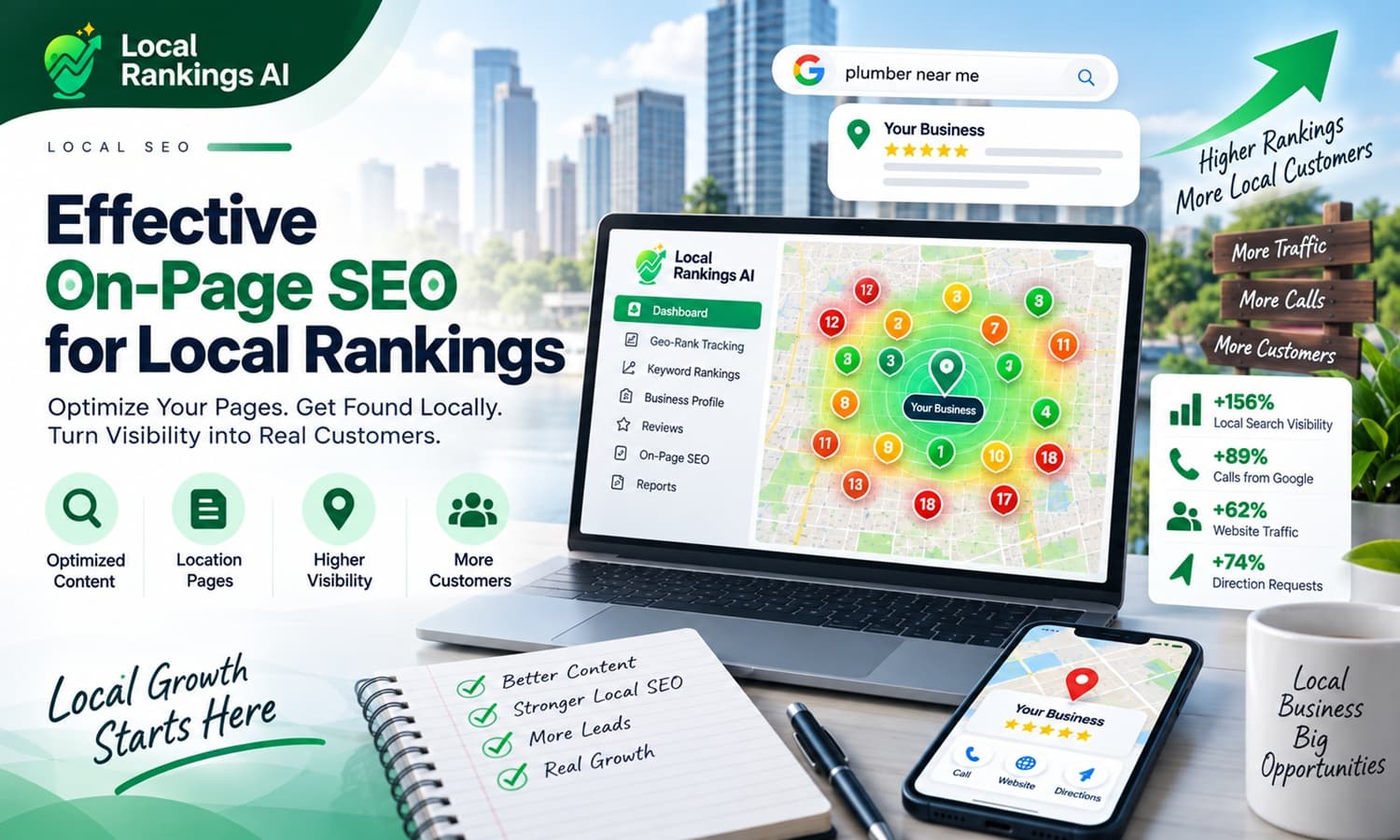
This is where local SEO reporting solutions built for geographic coverage matter. A precision geo-rank grid tracks performance across dozens of points in a service area, not just headquarters. It flags street-level blind spots — neighborhoods where visibility quietly drops. So owners act on real data instead of a comforting single number.
Which Metrics Prove Local SEO Is Working?
Street-level ranking movement proves local SEO performance better than a single citywide number. A business can rank first downtown while potentially losing visibility in nearby areas, which can cost real customers. Local SEO reporting solutions built to track visibility at this granular level show exactly where a business gains ground. Where it quietly disappears from search results.
Ranking position alone doesn't tell the full story, though. SEO already stands among the top marketing channels delivering measurable return for B2B brands, which means owners should expect reporting that ties directly to revenue outcomes, not vanity metrics.
What should a local SEO report actually include?
A strong report combines three data layers: geo-based ranking positions, profile health, and proof of change over time. Business profile audits and review activity feed into that profile-health layer, going beyond star ratings to flag missing information, inconsistent listings, and optimization gaps across Google, Bing, Apple, and Yelp.
Local SEO analytics tools that surface Google Business Profile insights — calls placed, direction requests, and website clicks originating from the profile — add a fourth layer connecting visibility to actual customer behavior. A report that only shows ranking movement leaves out the "so what": whether that improved visibility is translating into phone calls and foot traffic. Pairing ranking data with these engagement metrics gives owners a complete read on local SEO ROI, not just a snapshot of where a listing sits in search results.
How does Google Business Profile data factor into reporting?
Google Business Profile status remains a core input because it directly shapes search rankings and customer trust. Reports that track profile completeness, review response rates, and listing accuracy alongside rankings give a fuller performance picture.
Key metrics worth watching:
Street-level rank position by service area
Google Business Profile completeness and accuracy
Review volume and response rate
Ranking trend over time, documented in clean, client-ready reports leadership can review without translation.
How Do You Turn Data Into Growth Actions?
Raw ranking numbers mean little without a next step attached. Local Rankings AI converts geo-rank data into prioritized, actionable AI tasks, so business owners get a clear to-do list instead of a spreadsheet to decode alone. This turns analysis into execution, one task at a time.
Those tasks typically fall into a few recurring categories: closing profile gaps flagged during an audit, responding to unaddressed reviews, updating inconsistent listing data across directories, and reinforcing rankings in zones where visibility is slipping. Prioritizing this way means a business owner or marketing manager isn't guessing which fix matters most — the local SEO metrics behind each task make the priority order clear.
Should a business handle reporting internally or outsource it?
The answer depends on internal bandwidth. Local Rankings AI gives businesses two paths: run the platform independently, or hand optimization and monitoring to a dedicated team. Multi-location brands with limited marketing staff often lean toward managed monitoring, while teams with in-house capacity prefer direct control.
Growth actions only matter if they lead somewhere measurable. Local Rankings AI ties every task back to one outcome: converting local visibility into more leads and customers, not just higher positions on a map. Website and Google Business Profile optimization feed directly into that goal.
Local SEO reporting solutions work best as an ongoing discipline, not a one-time cleanup. Results build gradually — consistent, data-informed effort compounds into more traffic, stronger visibility, and long-term growth. A business that skips this cycle risks stalling exactly where competitors keep climbing.
Generate a task list from ranking data, not raw scores alone
Choose self-managed tools or team-led monitoring based on capacity
Track progress against leads and customers, not rank alone
Repeat the cycle consistently to compound gains over time
Local SEO analytics transforms raw data into strategic advantage, enabling businesses to identify performance gaps and capitalize on untapped opportunities within their service areas. By leveraging geo-rank insights and actionable intelligence, you move beyond guesswork to make informed decisions that directly impact visibility and customer acquisition. The businesses that win locally are those that monitor, optimize, and adapt based on real performance metrics—turning analytics into measurable growth and sustainable competitive advantage.
Frequently Asked Questions
Conclusion
Local SEO analytics only pay off when they're tracked consistently and acted on. A single ranking check from one location tells an incomplete story — real visibility only shows up in street-level data across an entire service area, paired with Google Business Profile health and engagement metrics like calls, direction requests, and website clicks. That combination is what turns raw numbers into a clear picture of local SEO ROI.
For multi-location brands especially, a consolidated local SEO dashboard replaces guesswork with evidence, surfacing which markets are performing and which need attention before a slow patch becomes a lost one. Local Rankings AI packages that visibility data into prioritized, actionable tasks and client-ready reports, so business owners and marketing managers spend less time decoding spreadsheets and more time acting on what actually moves leads and revenue. Treated as an ongoing discipline rather than a one-time check, local SEO reporting is what keeps a business visible, competitive, and growing across every market it serves.