NAP Optimization Tools: Maximize Your Local SEO | Local Rankings AI
Maximize Your Local SEO With NAP Optimization Tools
Discover how NAP optimization tools help identify inconsistent business information, improve listing accuracy, strengthen local SEO rankings, and boost your visibility across search engines and online directories.
NAP optimization tools maximize local SEO by auditing name, address, and phone local SEO consistency across Google, Bing, Apple, and Yelp, the discipline commonly known as local SEO NAP consistency. Local Rankings AI identifies citation errors, tracks street-level ranking shifts, and delivers AI-driven tasks that correct discrepancies, strengthening search engine trust. Boosting visibility for small business owners and agencies managing multiple client listings.
Search engines rely on NAP data to confirm that a business is legitimate, active, and located where it claims to be. When that information is consistent across every platform, algorithms can confidently associate a business with a geographic area, which directly supports rankings in local map packs and organic search results. When it isn't, search engines hedge, spreading trust across conflicting records instead of concentrating it behind a single verified profile. That hedging shows up as lower visibility, missed calls, and directions sent to the wrong address.
For businesses managing a single location, the stakes are significant enough. For agencies overseeing dozens or hundreds of client listings, manual tracking becomes impossible to sustain. NAP optimization tools solve that scale problem by continuously auditing every listing, flagging discrepancies automatically, and giving teams a prioritized task list instead of a spreadsheet full of guesswork.
Key Takeaways
NAP consistency across Google and other search engines directly improves your local business's online visibility and search rankings.
UTM codes track marketing campaign performance, enabling data-driven optimization of your local SEO strategy and digital efforts.
Standardized Name, Address, Phone Number information eliminates confusion and builds trust with both search algorithms and potential customers.
Month-to-month service agreements eliminate long-term contracts, allowing businesses to adjust local SEO strategies based on performance results.
What Do You Need Before Optimizing Your NAP?
Preparation starts with a clear picture of current listing accuracy across every platform a business appears on. NAP stands for Name, Address, and Phone number. The three data points every citation and directory listing must match exactly. Mismatched details across Google, Bing, Apple, and Yelp confuse search algorithms and cost businesses ranking positions before any optimization work begins.
Even small formatting differences count as inconsistencies in the eyes of search engines. "St." versus "Street," a missing suite number, or a phone number listed with and without an area code can all register as separate business identities rather than variations of the same one. Multiply that across dozens of directories and a handful of small discrepancies can fragment a single business into several conflicting profiles, diluting the authority any one of them can build.
Before any correction begins, businesses need a documented baseline: the exact legal business name, the precise mailing address as it should appear everywhere, and a single primary phone number designated as the source of truth. That baseline becomes the reference point every existing listing gets checked against, and it prevents the common mistake of "fixing" one directory to match another directory that was already wrong.
What data do businesses need to gather first?
A complete inventory of existing listings comes first. Business owners and marketing agencies should pull current NAP records from every major platform, then compare them line by line for discrepancies in spelling, suite numbers, or phone formatting.
How can businesses see where NAP problems are hurting rankings?
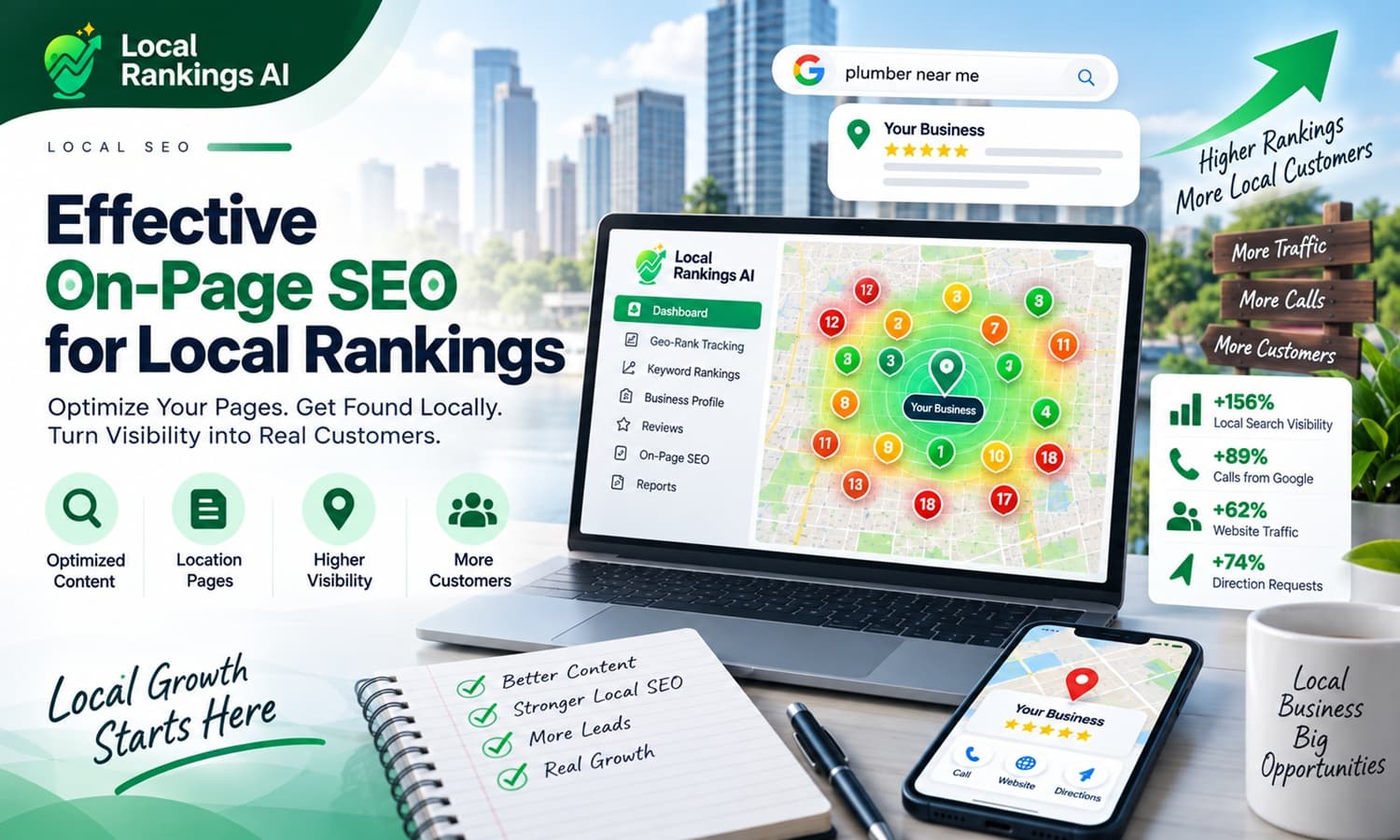
A precision geo-rank local SEO grid solves this by mapping rankings across an entire service area, not just one central point. This reveals exactly where NAP-related inconsistencies are dragging down visibility street by street, before any fixes get made.
Local Business NAP Optimization Tools give owners a structured way to act on that data. Two paths exist from there:
Run the audit independently using the platform's self-service tools.
Hand optimization and ongoing monitoring to the Local Rankings AI team.
Either path requires the same starting point: accurate, verified listing data across every channel.
How Do You Audit and Fix NAP Listings?
Correcting inconsistent business listings requires two paths: manual review of every website and directory, or automated software built for the task. Owners who skip this step risk losing search visibility as engines pull conflicting data from scattered sources. Manual audits work for businesses with a handful of listings. The process grows unwieldy fast once citations spread across dozens of directories.
Manual review means logging into each platform, Google Business Profile, Bing Places, Apple Maps Connect, Yelp for Business, and every relevant local directory, then checking the listed name, address, and phone number against the verified source record one field at a time. For a single-location business with a small footprint, this can be completed in an afternoon. For multi-location businesses or agencies managing several clients, the same process multiplied across dozens of profiles quickly consumes hours each month, and errors are easy to miss when reviewers are scanning repetitive data by eye.
Local Business NAP Optimization Tools solve this scaling problem by automating detection and reporting. Local Rankings AI identifies ranking shifts down to the street level, then converts each discrepancy into a specific, actionable task. Instead of guessing which directory holds outdated information, owners see exactly what needs correction and where.
What Should a NAP Audit Actually Check?
A thorough local citation audit examines Google Business Profile NAP data alongside directory citations on Bing, Apple Maps, and Yelp. Business profile audits and website optimization form the core toolset for catching mismatched names, addresses, or phone numbers before they damage rankings. Every field matters, since search engines compile this scattered data into a single trust signal.
Follow this sequence to fix listings efficiently:
Pull a complete inventory of every platform where the business appears.
Compare name, address, and phone details against the verified source record.
Flag mismatches using automated scanning rather than manual spot checks.
Correct each inconsistency directly on the platform where it lives.
Recheck listings after 30 to 60 days to confirm changes took effect.
Search engines scan every published listing when compiling ranking data. A single overlooked directory can undercut an otherwise clean profile. Treating each correction as measurable progress keeps the audit process disciplined and results-focused.
What Mistakes Undermine NAP Consistency Efforts?
Mismatched business names, addresses, or phone numbers across directories create the biggest breakdown in citation accuracy. Once these details drift out of sync, search engines lose confidence in confirming where a business actually operates, weakening the trust and credibility signals that support local rankings. A single outdated suite number or an old area code, left uncorrected on even one platform, can quietly erode months of ranking progress.
This breakdown often starts innocently: a business moves locations, changes a phone provider, or gets acquired and rebrands, and the update happens on the website and Google Business Profile but never makes it to the dozens of secondary directories still holding the old information. Data aggregators that feed directories and apps can then republish the outdated details for months or years after the change, actively working against every effort to establish accurate signals elsewhere.
Duplicate listings compound the problem. When a business is listed twice under slightly different names or addresses on the same platform, search engines struggle to determine which profile is authoritative, splitting reviews, local ranking signals, and customer trust between two competing entries instead of consolidating them behind one.
Why does inconsistent tracking make NAP errors worse?
Errors multiply when nobody monitors listings after the initial fix. Local Business NAP Optimization Tools address this by maintaining continuous oversight of business profiles, including compliance checks and data protection, so corrected listings don't silently drift out of date again.
How can agencies prove NAP fixes actually worked?
Skipping documentation is another common mistake. Corrections without a paper trail leave clients and business owners unsure whether anything changed. Local Rankings AI converts completed fixes into clean, client-ready reports, giving agencies clear proof of the work performed:
Before-and-after listing snapshots
Verified correction logs
Client-ready summary documentation
NAP optimization forms the foundation of a robust local SEO strategy, directly influencing how search engines and customers discover your business across multiple platforms. By maintaining consistent business information, auditing your profiles, and leveraging geo-rank data to identify underperforming areas, you transform visibility into measurable growth. The businesses that prioritize NAP accuracy gain a competitive advantage in their local markets, converting enhanced rankings into qualified leads and sustained customer acquisition.
.png&w=3840&q=75)