Uncover Unique Features of the Best Local SEO Tools | Local Rankings AI
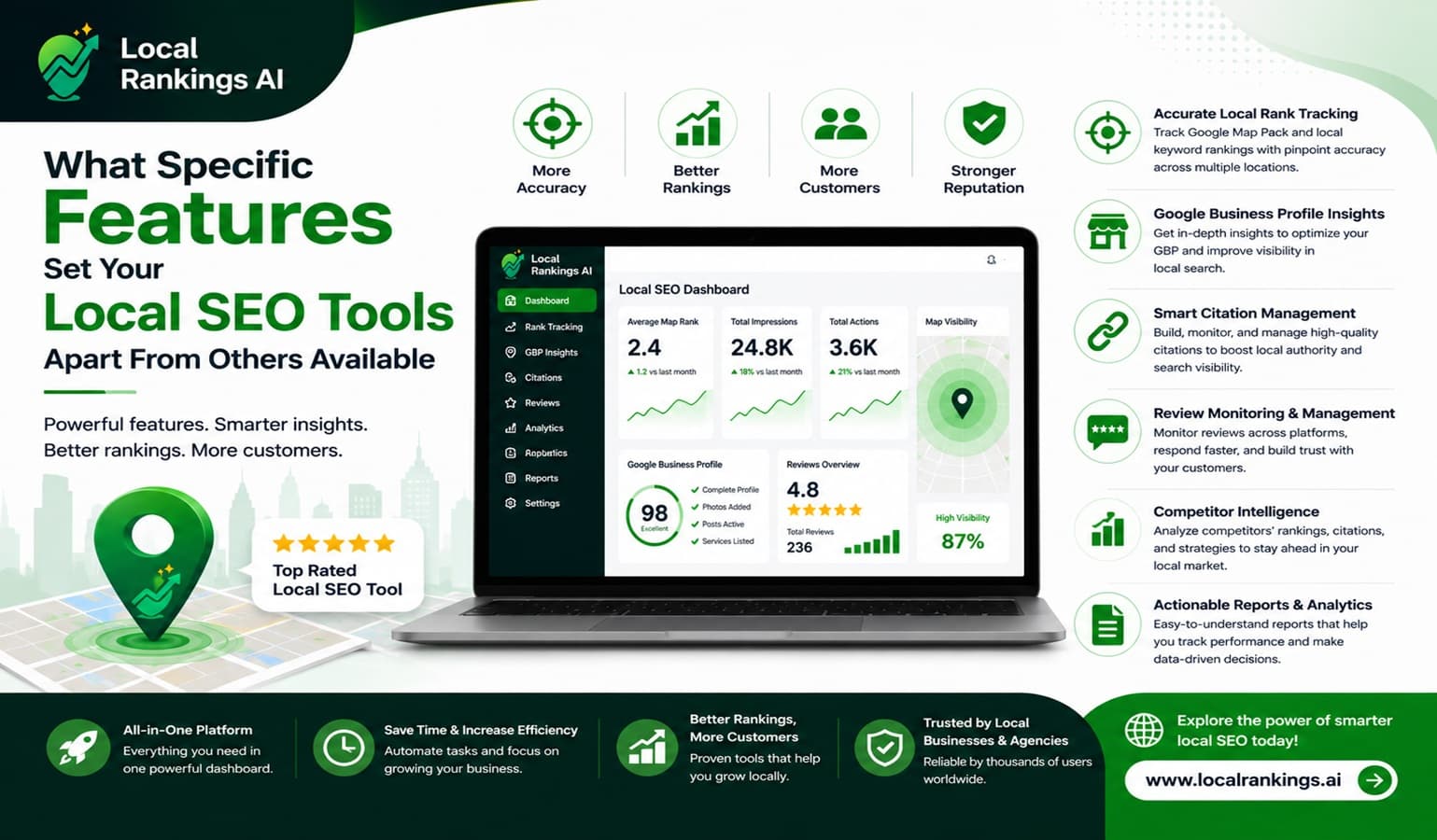
What Specific Features Set Your Local SEO Tools Apart From Others Available
Precision, not luck, defines top local SEO tools. Semrush's Local Toolkit stands out among the 10 essential tools by combining advanced analytics, visibility tracking, and competitor insights into one powerhouse platform.
Precision, not luck, defines top local SEO tools. Semrush's Local Toolkit stands out among the 10 essential tools by combining advanced analytics, visibility tracking, and competitor insights into one powerhouse platform—helping growth-focused businesses like those AVINTIV supports dominate local search rankings across multiple locations.
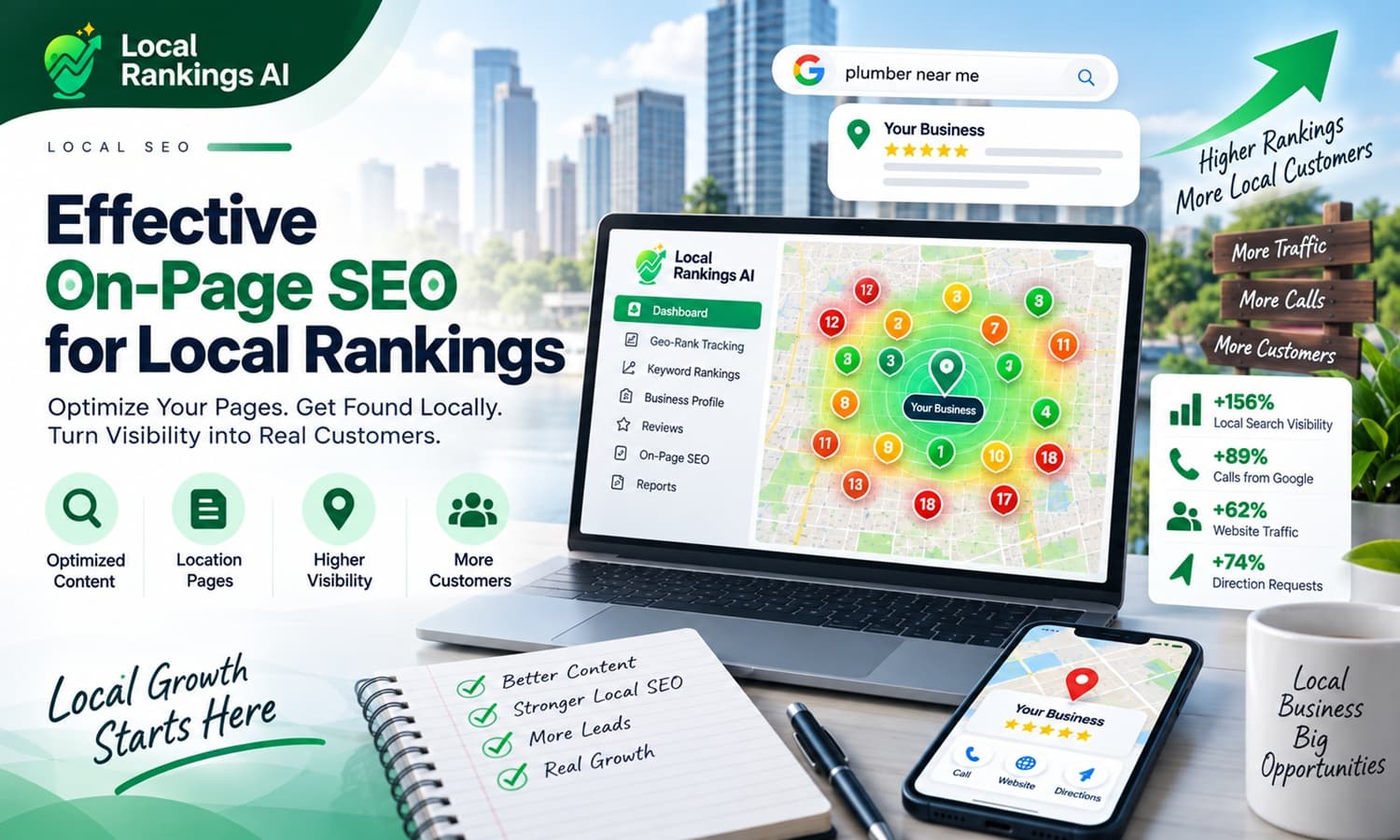
Differentiation in local SEO tools comes down to street-level precision rather than city-wide averages. Local Rankings AI delivers a geo-rank grid tracking visibility block by block, pairing that data with AI review automation, business profile audits, and website optimization—answering the question, What Specific Features Set Your Local SEO Tools Apart From Others Available? Agencies and multi-location owners get client-ready reporting that turns granular ranking shifts into measurable, actionable growth strategies.
Key Takeaways
Local SEO tools provide precision targeting that separates top search rankings from competitor obscurity for location-based businesses.
Effective local SEO platforms track keyword rankings, competitor activity, and customer sentiment across multiple business locations simultaneously.
The right tool stack enables businesses to scale local SEO efforts, improve decision-making, and demonstrate measurable results to stakeholders.
Local SEO optimization increases business visibility in search results, making products and services easier for potential customers to discover.
What Specific Features Set Local SEO Tools Apart?
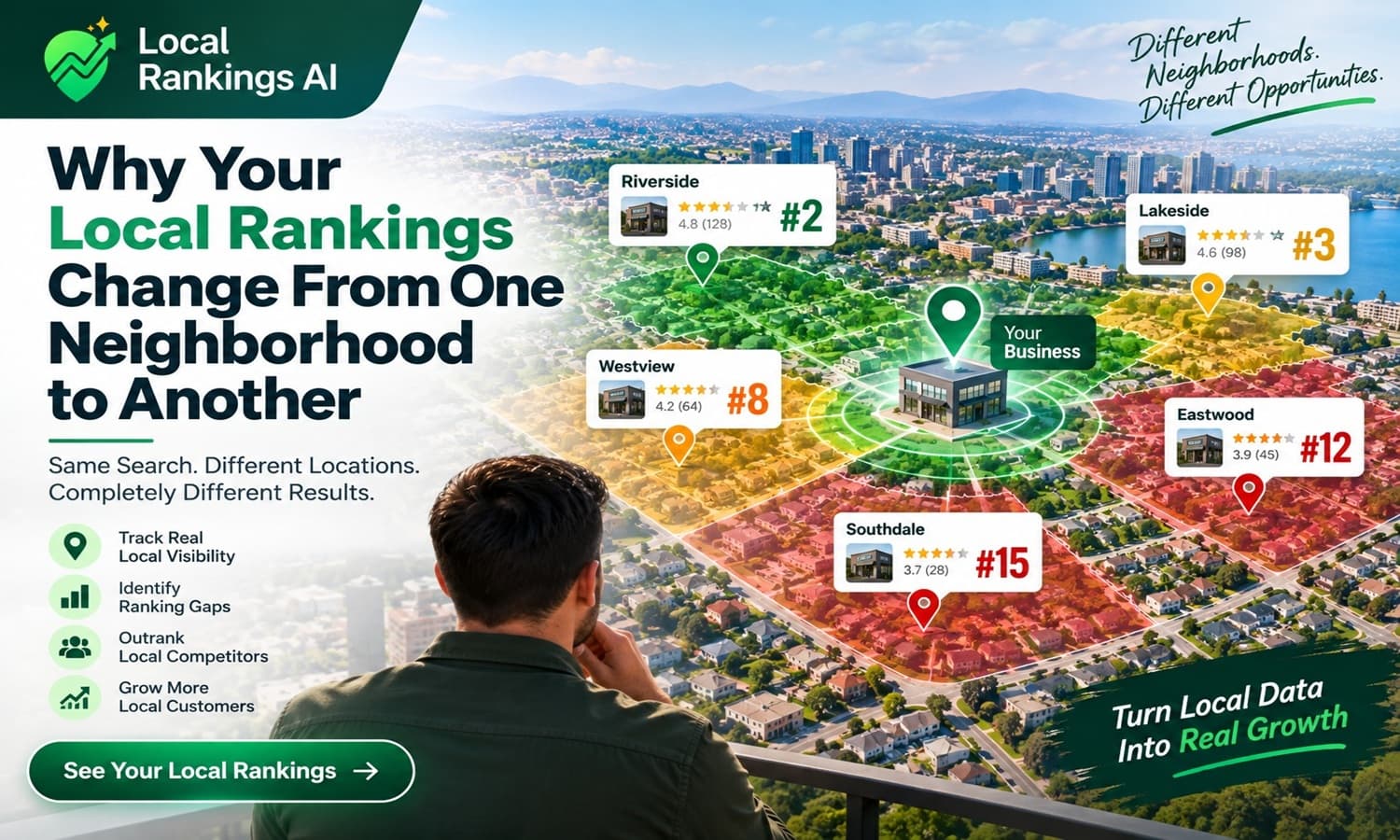
Granularity separates real local SEO software from generic dashboards. Specific features that set local SEO tools apart start with street-level rank tracking, which shows exactly where visibility breaks down block by block rather than reporting one flattened average position across an entire service area. A multi-location brand may rank well downtown but could be less visible in areas further away without detailed reporting.
Direction matters as much as data. Many platforms display charts and stop there, leaving marketing managers to guess what to fix next. AI-generated task lists close that gap by surfacing the next highest-impact change, turning raw ranking data into a prioritized action plan instead of a wall of numbers.
What makes an all-in-one platform different from single-purpose tools?
Agencies juggling separate logins for reviews, website audits, and profile management lose time and context. A unified system combining several functions in one place removes that friction:
Business rank tracking across service areas
AI review automation for reputation management
Website optimization guidance
Business profile audit capabilities
Why does precision matter more than luck in local search?
Local SEO outcomes depend on precision, not chance. Businesses that rely on broad, low-resolution reporting compete blind against rivals using granular, location-specific data. A disadvantage that compounds with every additional service area added to the map.
How Does Street-Level Tracking Change Your Strategy?
Street-level tracking replaces guesswork with location-specific evidence. Rankings for a single business shift meaningfully from block to block, even within the same service area, which means a strategy built on one snapshot misses most of the picture. Local Ranking AI Agencies and multi-location owners need visibility at the street level to know where a local SEO tool actually earns its differentiation.
A search performed from a business owner's own device rarely matches what a customer sees nearby. That gap creates false confidence. A location can hold the number one spot downtown while nearly disappearing a few blocks over. Without granular data, that blind spot stays hidden.
Why doesn't a business owner's own search reflect real customer visibility?
Personalized search history, device location, and prior browsing behavior skew results for the person doing the search. Customers searching from a different street or neighborhood see a different set of competitors entirely.
What should a reporting stack track across locations?
Multi-location reporting should monitor rankings across different search engines and geographic points simultaneously, not just one central address. That structure includes:
Location-by-location rank comparisons
Cross-engine visibility checks
Ongoing monitoring, not one-time snapshots
This granularity turns rankings data into a real strategic advantage.
Which Reporting And Automation Features Save Time?
Automated reporting saves the most time by turning raw ranking data into finished, client-ready documentation without manual formatting. Industry analysis confirms that manual optimization no longer keeps pace with local search demands, which is why software that automates listings and review management has become the standard for agencies managing multiple locations.
For agencies juggling dozens of client accounts, proof of performance matters as much as the performance itself. Reports that convert ranking wins into clean, shareable documentation eliminate hours of spreadsheet work and screenshot compiling each month.
Does This Software Handle Optimization Automatically, Or Does Someone Manually Manage It?
Both paths exist, depending on the business's bandwidth. Marketing managers can run the local SEO tools themselves, adjusting listings and reviews directly. Multi-location owners without in-house SEO staff can instead hand monitoring. Execution to a dedicated team, freeing internal resources for other priorities.
How Fast Can A Business See Its Current Rankings?
Evaluation starts quickly. A rankings map generates without requiring a credit card, and results appear in under 60 seconds. That speed matters for agencies comparing multiple platforms before committing budget.
Time-saving features to prioritize:
Automated review management instead of manual outreach
Listing automation across major search platforms
Client-ready reports generated automatically, not built by hand
Flexible setup: self-managed or team-managed monitoring
The most effective local SEO tools distinguish themselves through precision, actionable intelligence, and results-driven implementation. By combining geo-level ranking visibility with automated optimization tasks, leading platforms transform raw data into strategic advantages that directly impact visibility and customer acquisition. The difference lies not in complexity, but in delivering clear, measurable outcomes that businesses can track and replicate across their entire service areas—converting local visibility into sustainable growth.
Frequently Asked Questions
Conclusion
Choosing a local SEO tool comes down to how much precision it delivers and how much of the resulting work it automates. Street-level rank tracking exposes visibility gaps that city-wide averages hide, AI-driven task lists turn that data into a clear action plan, and an all-in-one platform—covering rank tracking, review automation, business profile audits, and website optimization—removes the friction of juggling separate systems. For agencies and multi-location owners, that combination of granular data and automated reporting is what separates a tool that simply displays numbers from one that drives measurable, replicable growth across every location.