Local Business Keyword Tracking Software: Monitor Local Rankings | Local Rankings AI
Local Business Keyword Tracking Software: How to Accurately Monitor Local Rankings and Boost Your Local SEO Visibility
Learn how local business keyword tracking software helps monitor rankings, identify local SEO opportunities, track competitors, and improve visibility across your service area.
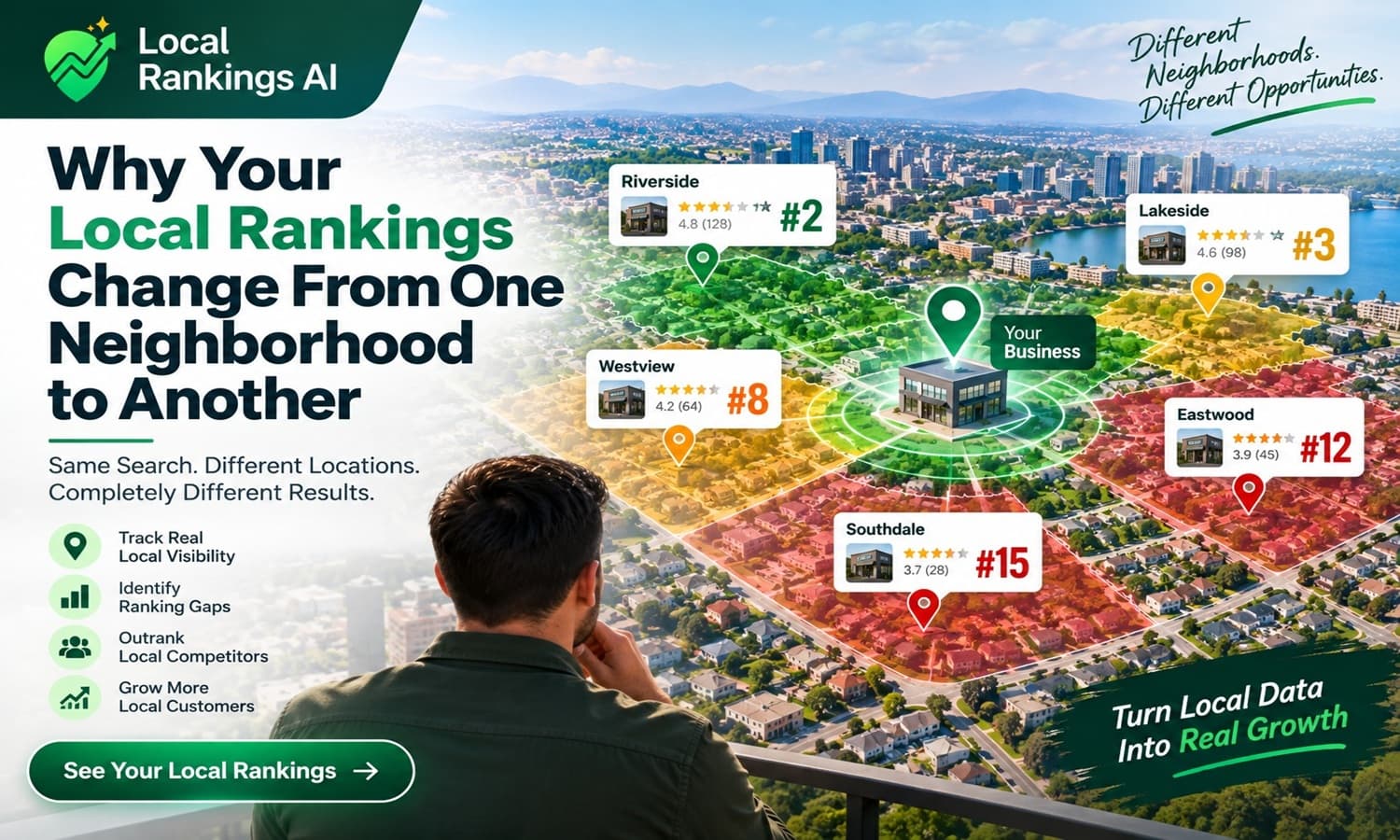
For a local business, ranking well in Google is not simply about appearing for a keyword. A business may rank #2 when searched from one neighborhood and #15 from another. It may perform strongly in Google Maps while appearing lower in organic results. Mobile and desktop rankings can also differ.
That is why local business keyword tracking software is essential for businesses and agencies that depend on local search visibility.
Unlike traditional rank tracking, local SEO tracking evaluates rankings based on specific locations, search types, devices, competitors, and local SERP features. With accurate data, businesses can identify ranking opportunities, understand competitive gaps, and make better decisions about their local SEO strategy.
What Is Local Business Keyword Tracking Software and Why Is It Essential?
Local business keyword tracking software is designed to monitor how a business ranks for specific search queries within defined geographic areas. Instead of relying on a single national or city-level ranking, local rank tracking can show visibility at the neighborhood, ZIP code, or grid level.
For example, a dental practice may rank well for "dentist near me" close to its location but perform poorly several miles away. A standard SEO report may hide this variation, while a local rank tracker can visualize it.
Local keyword tracking helps businesses:
Monitor Google Maps and local organic rankings
Track rankings across specific locations
Compare mobile and desktop visibility
Identify competitors appearing ahead of the business
Measure ranking changes over time
Discover geographic areas with weak visibility
Evaluate the impact of local SEO campaigns
For agencies, this data also provides a clearer way to demonstrate SEO progress to clients.
How Does Local Rank Tracking Improve Local SEO Performance?
Local rank tracking turns rankings into actionable information.
Instead of knowing that a business ranks "around position 8," marketers can determine where the business ranks, for which keywords, and against which competitors.
Suppose a landscaping company ranks strongly in the northern part of a city but poorly in the south. That information could indicate an opportunity for localized content, service-area optimization, citation development, reviews, or Google Business Profile improvements.
Watch the video for how to optimize the Google My Business Profile:
Tracking rankings consistently also helps identify whether SEO changes are producing measurable improvements.
What Distinguishes Local Rank Trackers From General SEO Tools?
General SEO platforms are often designed around broader organic search analysis, including keyword research, backlinks, technical SEO, and national rankings.
Local rank tracking software focuses specifically on geographic search behavior.
Important distinctions include:
Location-specific ranking measurements
Google Maps and Local Pack tracking
Street-level or grid-based rank tracking
Local competitor comparisons
Mobile versus desktop visibility
Local SERP feature monitoring
Geographic ranking visualization
This makes dedicated local tracking particularly useful for businesses whose customers search within a defined service area.
Which Key Features Should You Look for in Local Rank Tracking Software?
Not every rank tracker provides the same level of local search intelligence. When evaluating software, look beyond the number of keywords it can track.
The most valuable platforms combine accurate geographic data, competitor intelligence, SERP analysis, reporting, and integrations.
How Does Geo-Specific Keyword Tracking Enhance Accuracy?
Location is one of the most important variables in local search.
Google can customize results according to a searcher's physical location, meaning two people searching the same keyword can receive different results.
Geo-specific tracking allows businesses to monitor rankings from defined locations rather than relying on a single generalized city ranking.
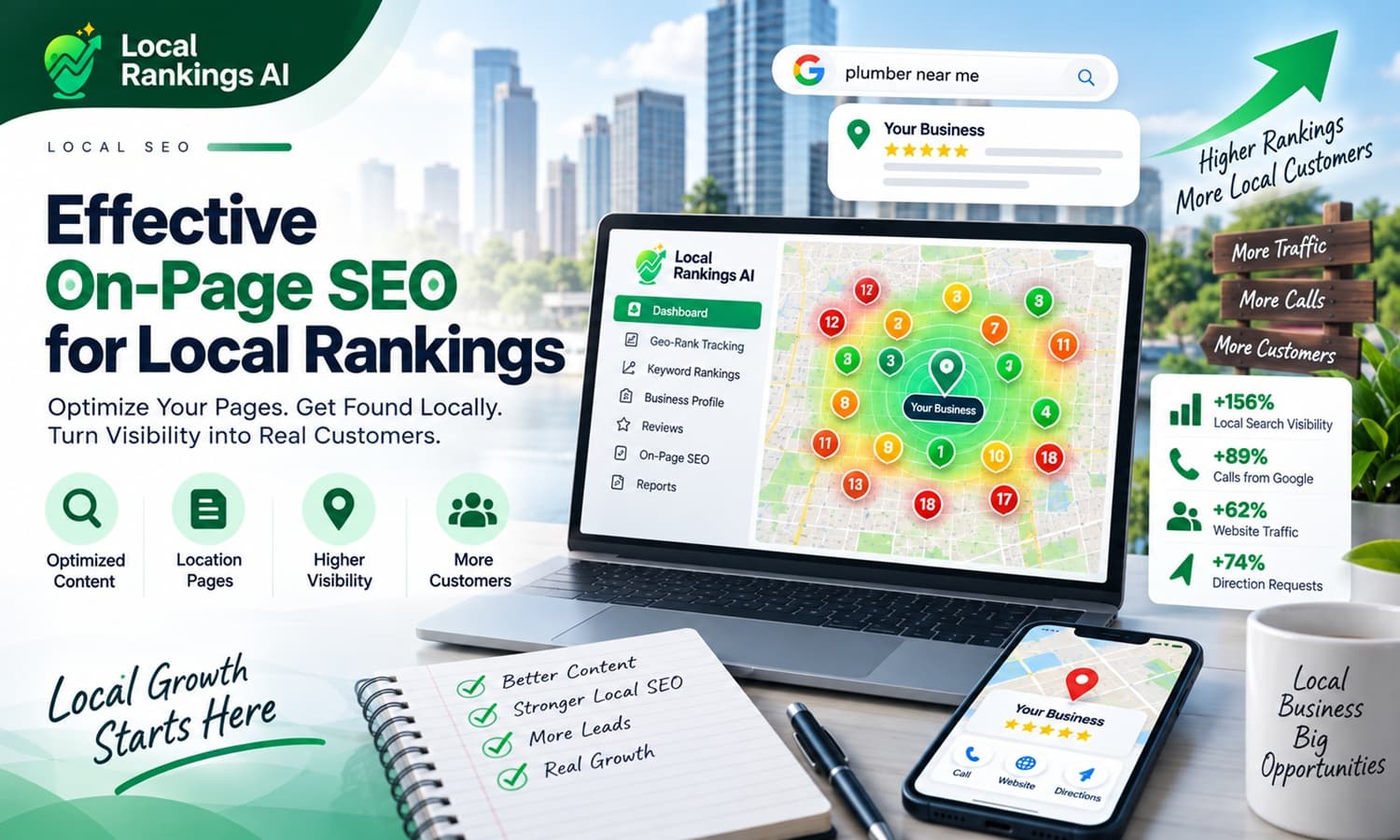
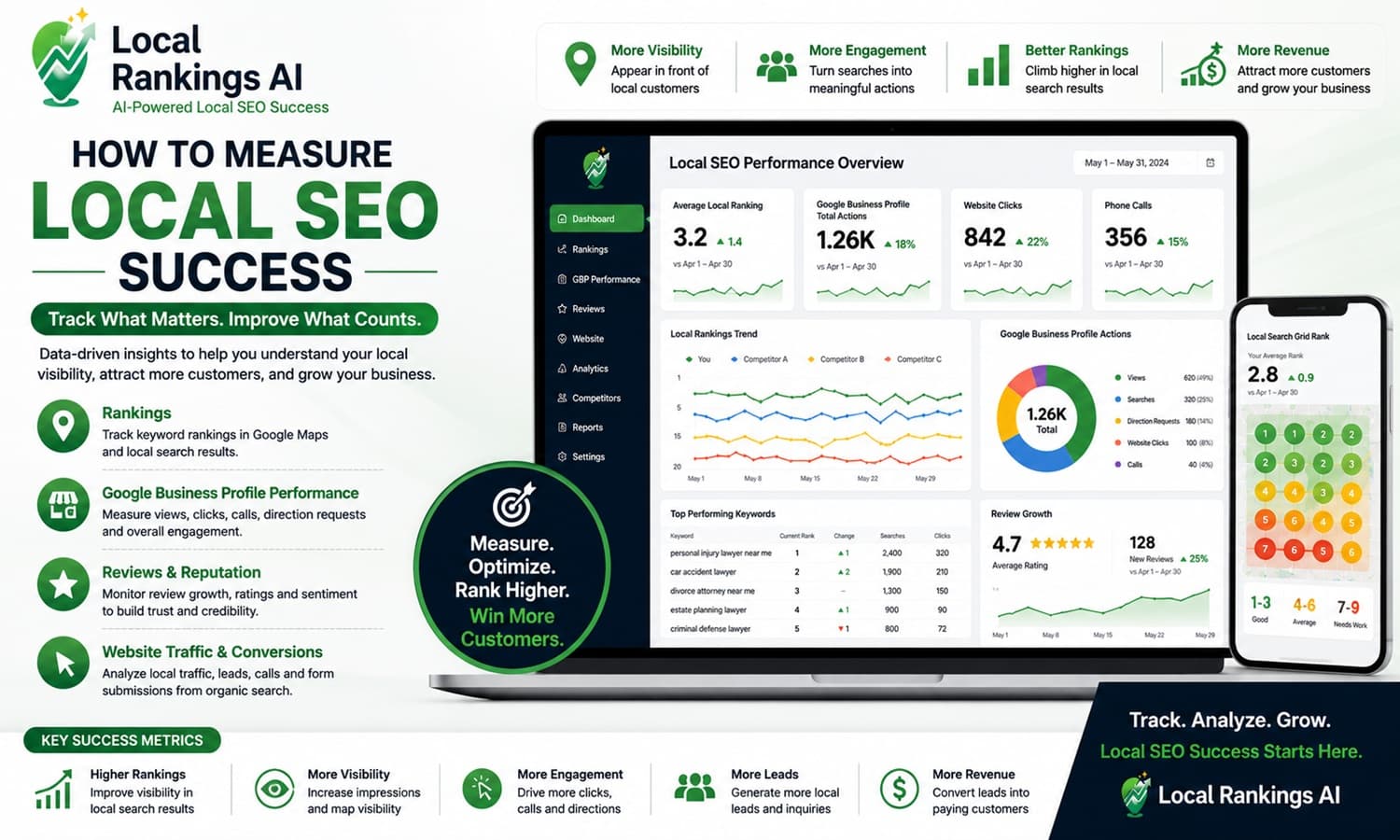
Advanced platforms can use location grids to show ranking performance across multiple points. This creates a local visibility map that reveals where a business is strong and where competitors are taking market share.
For service-area businesses, this can be particularly valuable because the business address alone does not represent the entire market it serves.
What Competitor Monitoring Features Drive Local Competitive Intelligence?
Local SEO is competitive. Ranking improvements should therefore be evaluated in relation to competing businesses.
A useful local rank tracker should help identify:
Which competitors rank for your target keywords
Where competitors outrank your business
Which keywords competitors are gaining
How competitor rankings change over time
Which locations have stronger competitor visibility
Which businesses dominate the Local Pack
This information provides a practical competitive intelligence layer.
Instead of simply asking, "Why did our ranking change?" marketers can ask, "Which competitor moved ahead, where did they move ahead, and what search terms are driving that visibility?"
How Do Mobile and Desktop Rank Views Affect Local Search Analysis?
Mobile search plays a major role in local discovery, particularly for searches involving phrases such as "near me."
How Can You Track and Analyze Local Competitor Rankings Effectively?
Competitor tracking becomes more useful when it is connected to specific business objectives.
Rather than tracking every competitor in a market, identify businesses competing for the same customers and keywords.
Start by monitoring your most commercially important searches, such as service + location combinations and high-intent "near me" searches.
Then compare competitor performance across locations and search types.
What Metrics Are Crucial for Local Competitor Rank Tracking?
Some of the most useful metrics include:
Average ranking position: Shows general ranking movement, but should not be viewed in isolation.
Top 3 visibility: Measures how frequently a business appears among the strongest local results.
Top 10 visibility: Helps evaluate broader search visibility.
Local Pack presence: Shows whether the business appears in Google's map-based results.
Share of local visibility: Helps compare the business against competing businesses across tracked searches.
Ranking distribution: Shows whether rankings are concentrated in a small geographic area or spread throughout the service territory.
Ranking change: Identifies improvements and declines over a selected period.
Together, these metrics provide a much more complete picture than a single ranking number.
Which Tools Support Comprehensive Competitor SERP Analysis?
A comprehensive local SEO platform should combine rank tracking with competitor and SERP analysis.
For example, Local Rankings AI focuses on local visibility data that can help businesses understand rankings across geographic areas, compare competitors, and identify local search opportunities.
Traditional SEO platforms can also be useful for broader keyword and organic competitor research. The important consideration is whether the platform can provide location-specific data rather than generalized rankings.
How to Use Competitor Data to Discover Keyword and Content Opportunities?
Competitor data can reveal opportunities that standard keyword research may miss.
Suppose three competitors consistently appear for:
"commercial painting contractor"
"office painting services"
"warehouse painting company"
while your business has little visibility for these searches.
That gap can inform new service pages, supporting blog content, internal links, Google Business Profile optimization, and other local SEO activities.
Competitor analysis should not mean copying another business's content. Instead, use competitor visibility to understand what the local market is searching for and where your business has an opportunity to provide a better, more relevant result.
How Does Local SEO and Google Maps Integration Impact Keyword Tracking?
For many local businesses, Google Maps visibility can directly influence customer acquisition.
A consumer searching for a restaurant, plumber, dentist, painter, or HVAC company may interact with the Local Pack or Maps results before visiting a traditional organic listing.
Consequently, local SEO tracking should consider both Google Maps visibility and organic rankings.
What Are the Differences Between Google Maps Rankings and Organic Local Rankings?
Google Maps rankings and traditional organic rankings are related but not identical.
Google Maps and Local Pack visibility are strongly influenced by local factors such as:
Business relevance
Geographic proximity
Business prominence
Google Business Profile information
Reviews and reputation
Local authority signals
Organic rankings depend more heavily on traditional search relevance, website quality, content, links, technical SEO, and other ranking signals.
A business can therefore have a strong organic position but weaker Maps visibility, or the opposite.
Tracking both helps identify which part of the local search ecosystem needs improvement.
How Does the Google Local Pack Affect Local Business Visibility?
The Google Local Pack typically appears prominently for searches with local intent.
For example, a search such as "roofing contractor near me" may display a group of local businesses with their names, ratings, locations, and other information.
Appearing in this section can place a business directly in front of customers who are actively looking for a service.
For this reason, Local Pack visibility should be treated as a core local SEO KPI, rather than an optional ranking metric.
Why Is Tracking Local Pack and Other Local SERP Features Critical?
Search results are no longer limited to ten blue organic links.
Local searches can include:
Local Pack results
Google Maps results
Reviews
Images
Local service information
AI-generated search experiences
Other SERP features
Tracking these elements helps businesses understand how customers encounter their brand throughout the search journey.
What Role Do Entities and Structured Data Play in Enhancing Local Rank Tracking?
Modern local search is increasingly focused on understanding business entities, not just matching exact keywords.
Google needs to understand what a business is, what services it provides, where it operates, and how it relates to other relevant information.
This makes entity consistency and structured data increasingly important components of a local SEO strategy.
How Does Entity Tracking Improve Local Business Keyword Accuracy?
An entity represents a distinct business, organization, place, service, or other identifiable concept.
For a local company, entity signals can include:
Business name
Address
Phone number
Website
Business category
Services
Locations served
Reviews
Business profiles
Structured data
Consistent information helps search engines connect these signals to the correct business.
This is particularly important where multiple businesses have similar names or operate within the same market.
How Can Leveraging Schema.org Structured Data Boost Local Search Visibility?
Schema.org structured data provides search engines with machine-readable information about a website.
For local businesses, relevant markup can include LocalBusiness, Organization, Service, BreadcrumbList, and other appropriate schema types.
Structured data does not guarantee higher rankings, but it can help search engines better understand the content and relationships represented on a website.
The key is accuracy. Schema should describe information that is actually present on the page and should not be used to manipulate search results.
What Is Knowledge Graph Presence and Why Does It Matter for Local Brands?
The Knowledge Graph helps search engines connect entities and information across different sources.
For established local businesses, consistent entity information across the website, Google Business Profile, directories, social profiles, and other authoritative sources can help reinforce the business's digital identity.
Local SEO software can complement this work by identifying visibility patterns and inconsistencies that may affect how a business is represented online.
How to Choose the Right Local Business Keyword Tracking Software for Your Needs?
The right platform depends on the size of your business, service area, number of locations, reporting requirements, and SEO objectives.
A small local business may only need accurate location-based ranking reports, while an agency managing dozens of locations may require automated reporting, competitor monitoring, integrations, and large-scale tracking.
What Pricing and Update Frequency Should You Expect?
Pricing generally depends on factors such as:
Number of keywords tracked
Number of locations
Number of business profiles
Competitor tracking requirements
Data update frequency
Reporting capabilities
Number of users
More frequent updates can be valuable for competitive markets where rankings change regularly.
However, daily tracking is not automatically better than weekly tracking. The right frequency depends on how quickly you need to identify ranking changes and act on them.
How Important Is Software Accuracy and Integration Capability?
Accuracy should be one of the first criteria when evaluating a local rank tracker.
A platform should provide clearly defined:
Search locations
Search engines
Devices
Keywords
Ranking methodology
Update schedules
Integration is also important for agencies and businesses that need to connect ranking data with other marketing information.
Useful integrations may include Google Business Profile, Google Search Console, Google Analytics, reporting platforms, or other SEO tools.
The objective is to connect rankings with actual business outcomes, rather than treating ranking position as the final goal.
Which Support and Reporting Features Enhance Usability?
Reporting should make local SEO data understandable and actionable.
Look for features such as:
Automated reports
White-label reporting
Ranking trend graphs
Geographic ranking maps
Competitor comparisons
Keyword segmentation
Local Pack tracking
Scheduled reporting
Custom dashboards
Actionable insights
The best report is not necessarily the one containing the most data. It is the one that helps a business owner understand what changed, why it matters, and what should happen next.
Turn Local Ranking Data Into Better SEO Decisions
Local SEO success requires more than checking a keyword once a month.
Local business keyword tracking software provides the geographic and competitive context needed to understand how a business performs across its actual market. By monitoring local organic rankings, Google Maps visibility, Local Pack presence, competitors, devices, and ranking trends, businesses can identify opportunities that may otherwise remain hidden.
The most effective approach is to treat ranking data as a decision-making resource.
Use it to identify underserved locations, discover competitive gaps, improve Google Business Profile performance, prioritize content, strengthen local authority, and measure whether SEO activities are producing meaningful visibility.
For businesses and agencies looking for a more localized approach to SEO measurement, Local Rankings AI can help turn local ranking data into a clearer picture of where a business is visible, where competitors are winning, and where there is room for growth.
Better local data leads to better SEO decisions—and better SEO decisions create stronger local visibility.