The Complete Guide to Using AI for Local Business Marketing in 2026
AI is revolutionizing local marketing. This guide breaks down exactly how small businesses can use AI to attract more customers, automate tasks, and increase revenue.
The Complete Guide to Using AI for Local Business Marketing in 2026
Artificial intelligence has fundamentally changed how local businesses compete in search and customer acquisition. In 2026, relying solely on traditional marketing methods is no longer enough. AI-driven tools now enable even small businesses to operate with the efficiency and precision once reserved for large enterprises.
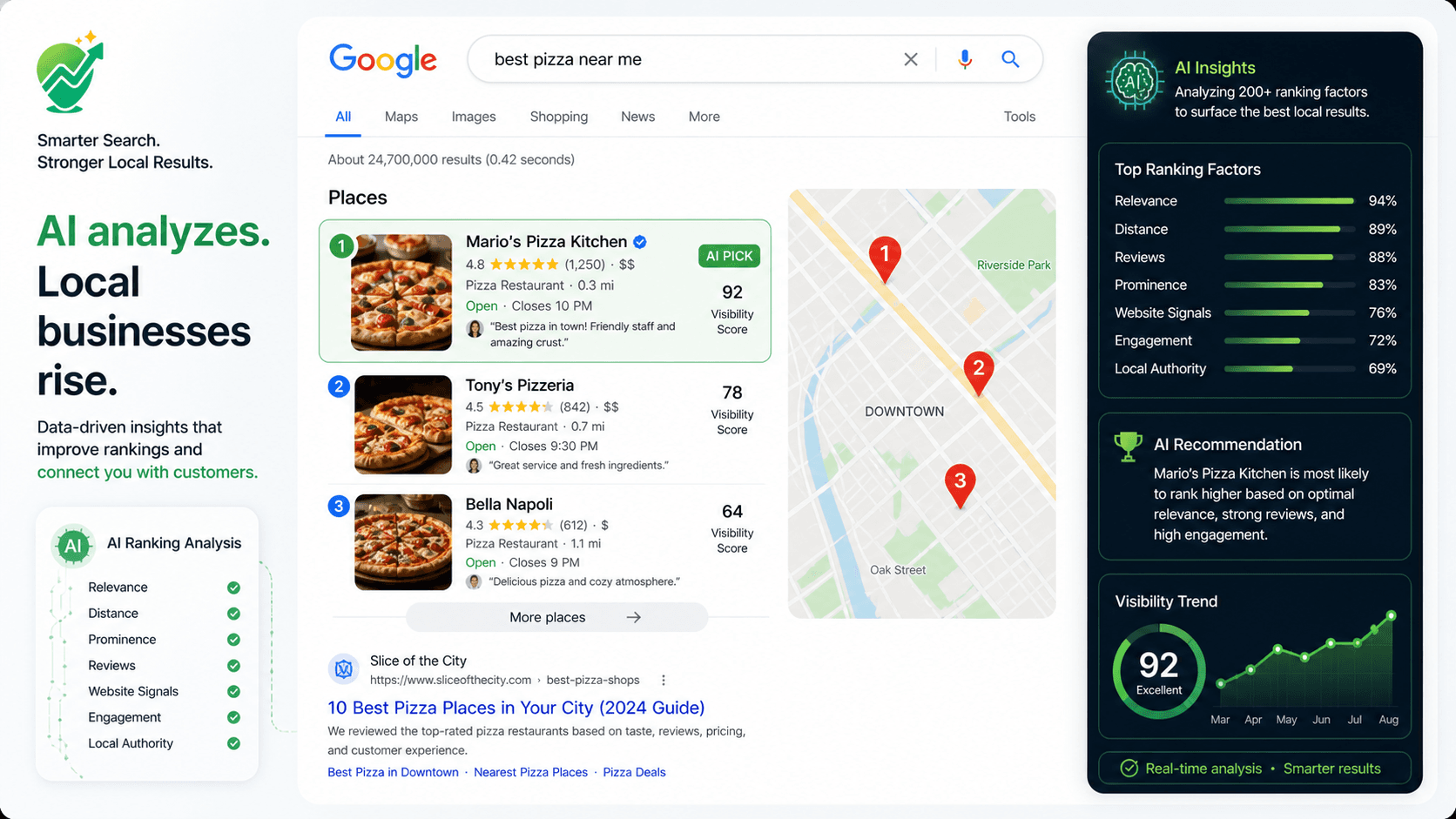
At its core, AI in local marketing is about leveraging data to make smarter decisions faster. From identifying high-value keywords to predicting customer behavior, AI removes much of the guesswork that historically defined marketing strategies.
One of the most impactful applications of AI is in content creation. Local businesses can now generate optimized blog posts, service pages, and Google Business Profile updates within minutes. These tools analyze search intent, competitor content, and keyword trends to produce material that is both relevant and competitive. However, the key is not to rely blindly on AI outputs but to refine them with local context and brand voice.
Another major advantage is automation. Tasks such as posting updates, responding to reviews, and managing customer inquiries can now be handled by AI-powered systems. This not only saves time but ensures consistency, which is critical for maintaining visibility in local search algorithms.

AI also enhances targeting capabilities. By analyzing user behavior, location data, and engagement patterns, businesses can deliver highly personalized marketing messages. For example, a restaurant can target users searching for “best dinner near me” during peak hours with tailored promotions.
Predictive analytics is another game-changer. AI can forecast trends, helping businesses prepare for seasonal demand or shifts in consumer behavior. This allows for proactive rather than reactive marketing strategies.
Customer experience is also being transformed. AI chatbots can handle inquiries 24/7, book appointments, and provide instant support. This level of responsiveness significantly improves conversion rates and customer satisfaction.
Despite these advantages, businesses must approach AI strategically. Over-automation can lead to generic messaging, which may harm brand authenticity. The most successful businesses use AI as a tool to enhance human creativity, not replace it.
Integration is key. AI tools should work seamlessly with existing systems such as CRM platforms, analytics tools, and Google Business Profiles. This ensures a unified approach to marketing and data analysis.
Looking ahead, AI will continue to evolve, offering even more advanced capabilities such as voice search optimization and hyper-personalized marketing. Businesses that adopt early and adapt continuously will have a significant competitive advantage.
In conclusion, AI is not just a trend—it is a foundational shift in how local marketing operates. By embracing AI thoughtfully, businesses can improve efficiency, increase visibility, and drive sustainable growth.