Online Local Rank Tracking: Daily, Weekly or Monthly - Which Frequency Is Best?
Discover whether daily, weekly, or monthly local rank tracking is right for your business. Compare each frequency to improve local SEO, monitor rankings, and make smarter decisions.
If you've ever logged into a rank tracker and refreshed it three times in one afternoon hoping your position jumped, you're not alone. Most local business owners go through this phase. The real question isn't whether you should track your rankings - it's how often you should actually be looking at them.
The answer depends on what you're trying to do. Daily, weekly, and monthly tracking all serve different purposes, and using the wrong one can either waste your time or cause you to miss real changes in your visibility. Let's break down what each option actually gives you.
How Often Should You Check Your Local Rankings? Daily vs Weekly vs Monthly
Why Tracking Frequency Even Matters
Local search rankings aren't fixed numbers. They shift based on competitor activity, algorithm updates, review velocity, and even the time of day in some cases. A ranking you saw this morning might not be the same one a customer sees tonight.
That's part of why tools like Local Rankings AI track visibility across an entire service area instead of a single point — because rankings genuinely move street by street, not just week by week. But knowing rankings change is only half the picture. The other half is figuring out how often you need to check in to make good decisions, without obsessing over noise that doesn't matter.
Schedule Demo
Daily Tracking: Good for Watching Active Campaigns
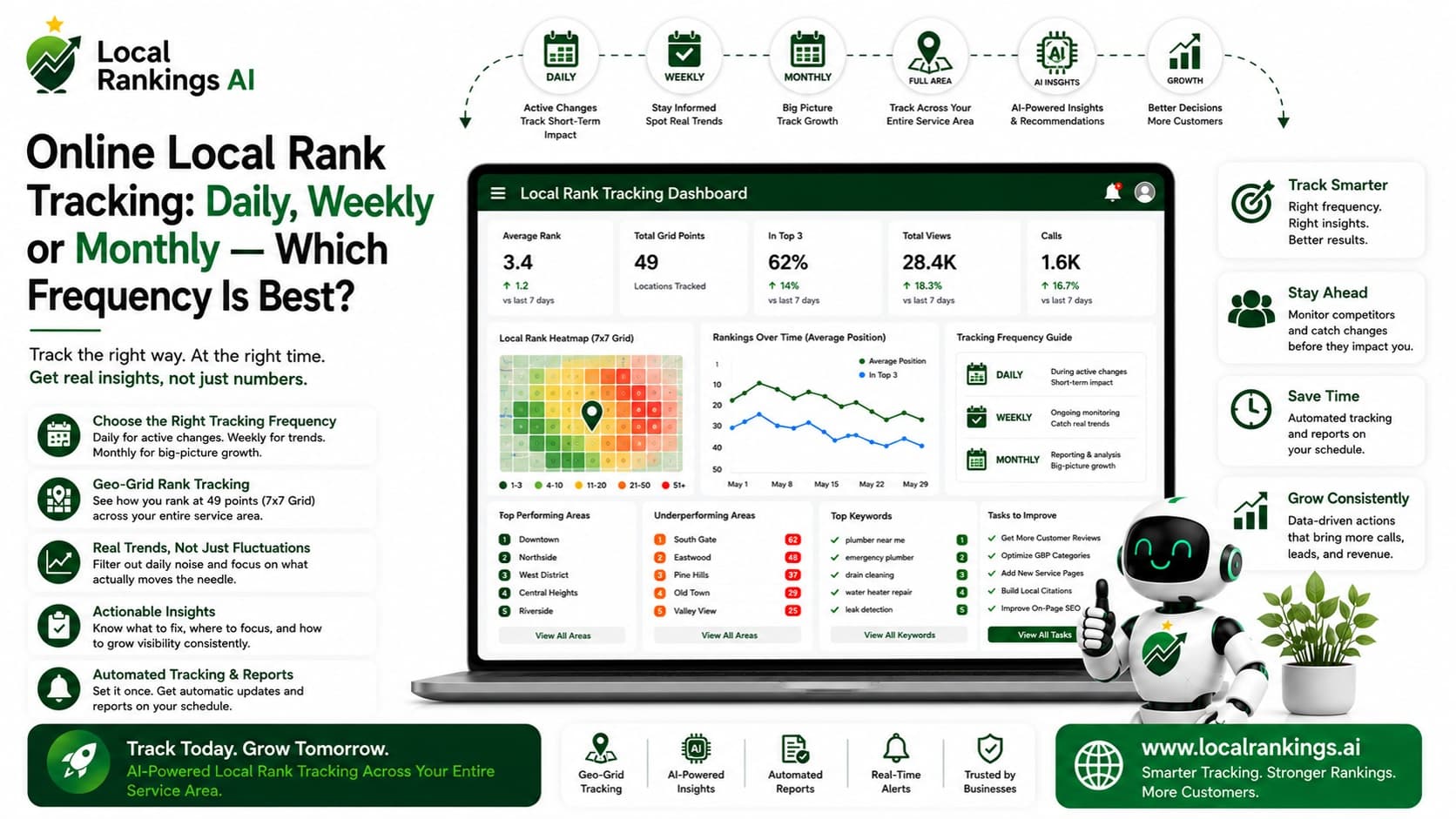
Daily tracking makes sense when something specific is happening. Maybe you just launched a new Google Business Profile optimization, started a review generation push, or made changes to your website. In these cases, checking daily helps you connect cause and effect - you can see whether a specific action moved the needle within days.
The downside? Local rankings naturally fluctuate even when nothing has changed on your end. Checking daily without context can lead to chasing small, meaningless swings. If you see a one-position drop on a Tuesday and panic, you might end up making changes that weren't actually needed.
Daily tracking works best as a short-term tool - turn it on during active optimization periods, then dial it back once things stabilize.
Weekly Tracking: The Sweet Spot for Most Businesses
For the majority of local businesses, weekly tracking hits the right balance. It's frequent enough to catch real trends - a steady climb or a concerning drop - without drowning you in daily noise.