Getting your business to show up on Google Maps sounds simple - but staying visible there? That's where things get tricky.
A lot of businesses assume that once they've created a listing, the job is done. But in reality, small mistakes - often unnoticed - can quietly push your business down in the rankings. And the frustrating part? Most of these issues are completely avoidable.
If your business isn't showing up where it should, there's a good chance one (or more) of these common local SEO mistakes is holding you back.
Why Your Business Isn’t Ranking on Google Maps (And How to Fix It)
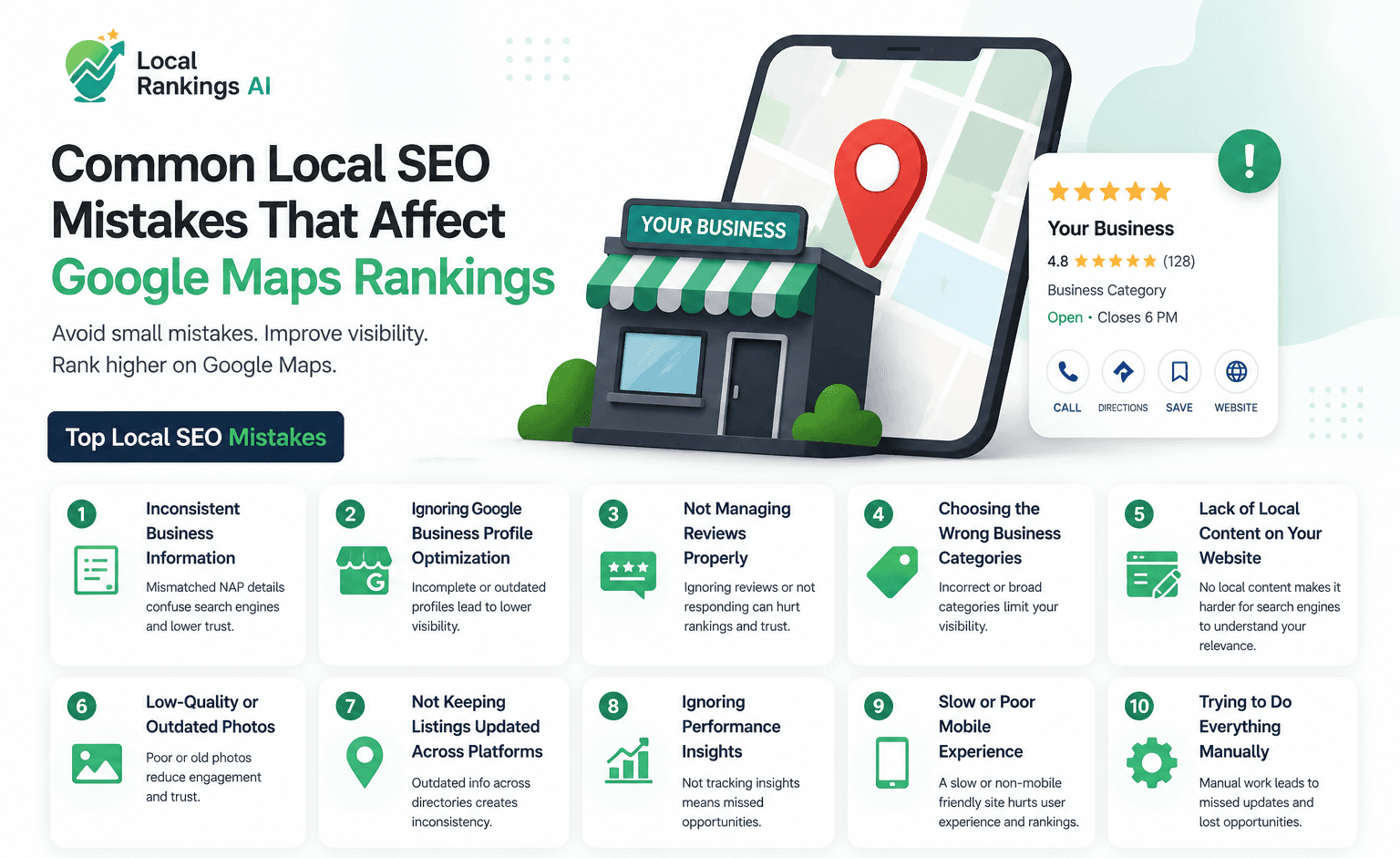
1. Inconsistent Business Information
This is one of the most common issues - and one of the easiest to overlook.
If your business name, address, or phone number (often called NAP) is different across platforms, it creates confusion. Search platforms rely on consistency to trust your information. When things don't match, your credibility drops - and so do your chances of ranking well.
For example:
Slightly different business names
Old phone numbers still listed somewhere
Address formats that don't match
2. Ignoring Google Business Profile Optimization
Just having a listing isn't enough. A lot of businesses set up their profile once and never touch it again.
That leads to:
Missing details
Outdated hours
No photos
Incomplete descriptions
An optimized profile gives search engines more context and gives users more confidence. Keeping it updated regularly makes a bigger difference than most people expect.
3. Not Managing Reviews Properly
Reviews aren't just about reputation - they directly impact visibility.
Common mistakes include:
Not asking customers for reviews
Ignoring negative feedback
Never responding at all
People pay attention to how businesses handle feedback. Even a simple response shows that you're active and care about your customers. Over time, consistent engagement builds trust - and that trust influences rankings.
4. Choosing the Wrong Business Categories
Your category tells search platforms what your business is about. If it's too broad - or just not accurate - you'll struggle to show up for the right searches.
For example, choosing "Consultant" instead of something more specific can limit your visibility. Being precise helps your business appear in more relevant searches.
5. Lack of Local Content on Your Website
Your website still plays a role in how your business performs locally. If your content doesn't mention:
Your service areas
Local keywords
Relevant information for your audience
It becomes harder for search engines to connect your business with local searches. You don't need to overdo it - just make sure your content reflects where you actually operate.
6. Low-Quality or Outdated Photos
Photos do more than just make your listing look good. They help users:
Understand your business
Build trust
Make quicker decisions
Listings with fresh, high-quality images tend to perform better. Outdated or missing photos can make your business feel inactive.
7. Not Keeping Listings Updated Across Platforms
Your Google Maps listing isn't the only place your business appears. There are directories, maps, and other platforms where your information lives.
If those aren't updated, it creates inconsistency - and that can hurt your overall visibility. Keeping everything aligned across platforms helps reinforce your credibility.
8. Ignoring Performance Insights
Many businesses don't track how their listing is actually performing. That means they don't know:
Where their traffic is coming from
What keywords are driving visibility
What needs improvement
Without that insight, it's hard to grow. Even basic tracking can help you spot patterns and make better decisions. This is where platforms like Local Rankings AI can help, giving businesses a clearer view of what's actually working and what needs attention.
9. Slow or Poor Mobile Experience
Most local searches happen on mobile devices. If your website loads slowly, is hard to navigate, or doesn't display properly - users will leave quickly.
That behavior sends negative signals, which can impact your rankings indirectly. A smooth mobile experience isn't optional anymore - it's expected.
10. Trying to Do Everything Manually
This is where a lot of businesses struggle. Managing listings, reviews, updates, and performance manually takes time and effort. When things get busy, it's easy to fall behind.
That’s where a more organized approach starts to make a difference - not necessarily doing more, but doing things in a more connected way, especially when you can clearly seehow everything actually works together.
What Actually Makes a Difference
Avoiding mistakes is important - but what really moves the needle is consistency.
Businesses that perform well on Google Maps usually:
Keep their information accurate
Stay active with updates and reviews
Maintain a strong, consistent presence
Pay attention to how users interact with their listing
It's not about doing everything perfectly - it's about showing up consistently over time.
Ranking on Google Maps isn't about one big strategy - it's about getting the small things right.
Most businesses don't struggle because they're doing something wrong on purpose. They just overlook details that quietly affect their visibility.
The good news is, once you're aware of these mistakes, they're completely fixable. And fixing them can make a noticeable difference in how often your business shows up - and how often people choose you.